Laser Cutting Robot
Robot Type: Industrial Laser Cutting Robot
Cutting Technology: Fiber Laser Cutting System
Cutting Materials: Carbon Steel, Stainless Steel, Aluminum and Other Metals
Processing Capability: 3D Cutting, Hole Cutting, Edge Trimming and Complex Shape Processing
Control System: CNC Robot Motion Control System
Laser Cutting Robot: Flexible Robotic Fiber Laser Cutting System for Metal Components
Luoyang Ruichuang Electrical Equipment Co., Ltd. (est. 2002) designs and builds industrial-grade laser cutting robot systems that pair a 6-axis robotic arm with a fiber laser cutting head. The method is designed to work with carbon steel, stainless steel, aluminium alloy and other metals at 0.5mm to 12mm thicknesses. It can be trimmed in three dimensions, cut holes, chamfer edges and process intricate contours – operations that ordinary flat bed laser machines just can’t accomplish. Ruichuang offers complete assistance from installation and commissioning to continued after-sales service.
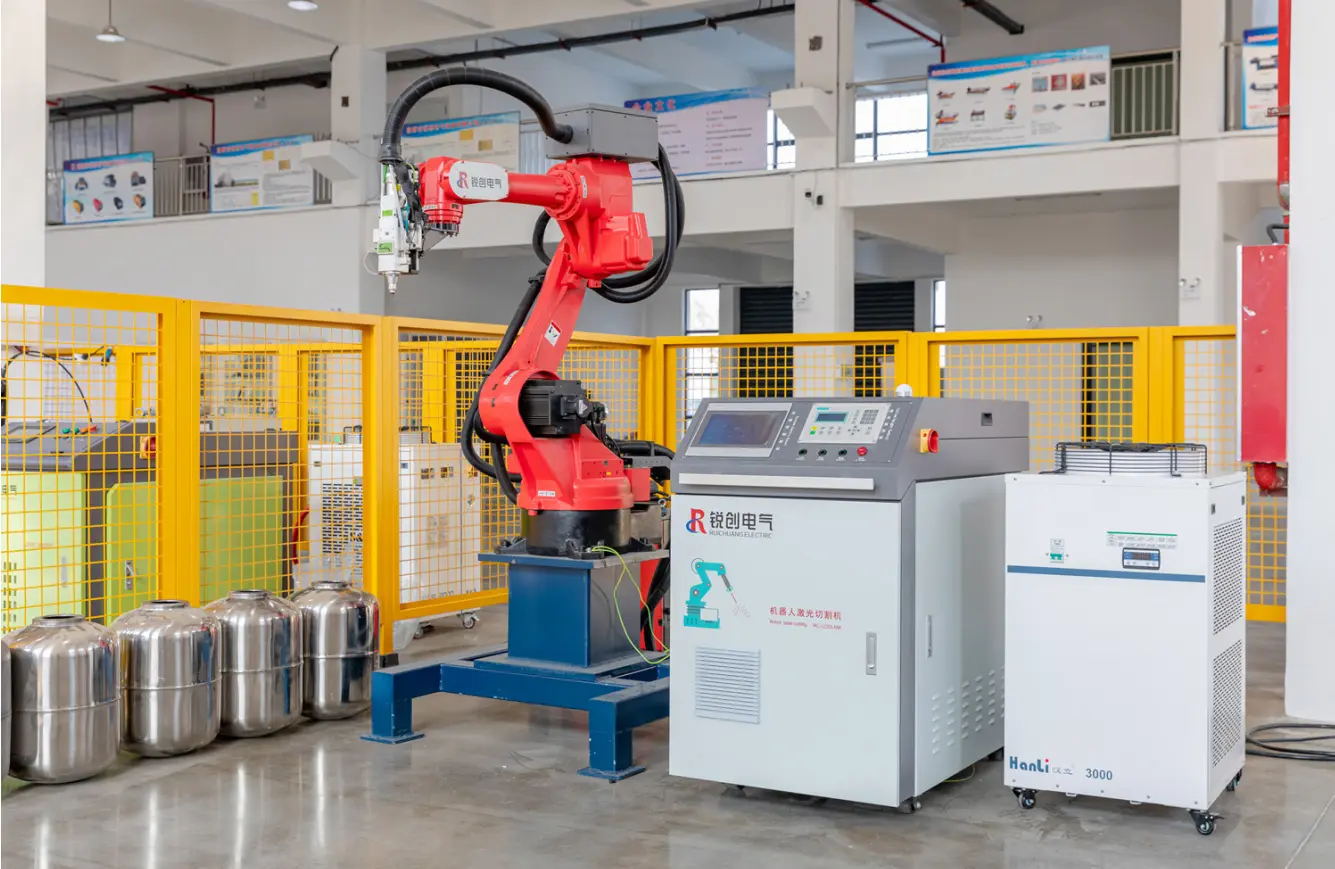
What Is a Laser Cutting Robot?
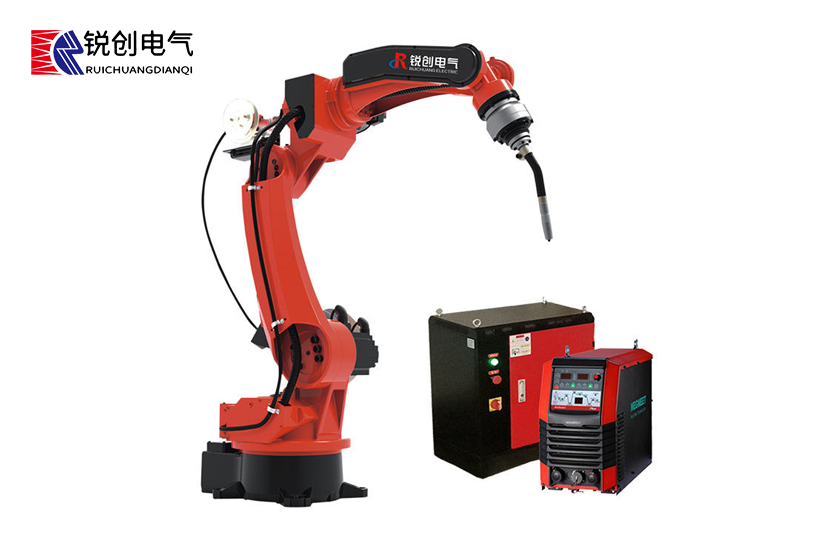
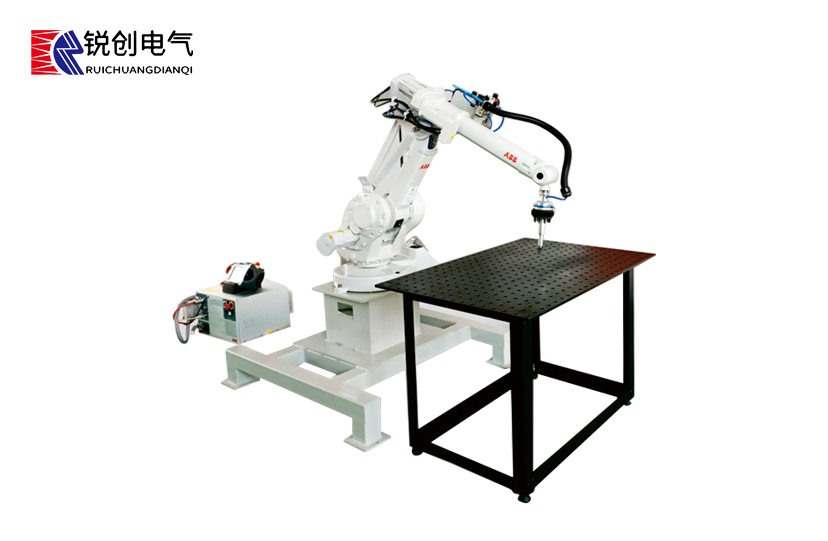
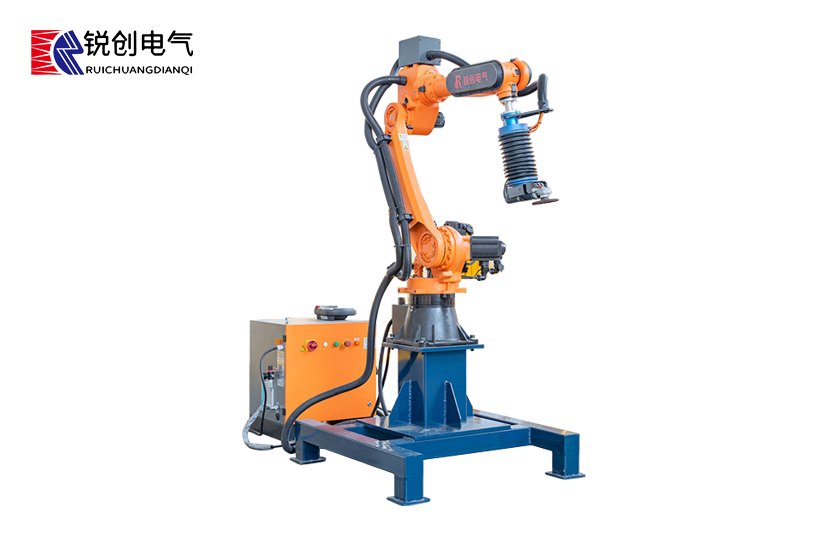
The product is an automatic system that combines a high accuracy multi axis robotic arm with a fibre laser cutting head and power supply. Unlike a flat bed CNC laser machine, this device travels freely in three dimensions to follow curved, contoured or uneven work piece surfaces.
This makes it especially suitable to processing formed metal parts – such as car stamping shells, pipe frames or structural brackets – when the cutting route follows a complicated 3D curve, rather than a flat 2D line.
Key Technical Specifications
| Parameter | Specification |
|---|---|
| Robot Type | 6-Axis Industrial Laser Cutting Robot |
| Laser Technology | Fiber Laser Cutting System |
| Compatible Laser Power | 1 kW – 12 kW |
| Cutting Thickness Range | 0.5 mm – 12 mm (material-dependent) |
| Repeatability | ±0.05 mm |
| Processing Capability | 3D Cutting, Hole Cutting, Edge Trimming, Complex Shape Processing |
| Cutting Materials | Carbon Steel, Stainless Steel, Aluminum Alloy, Galvanized Metal, Copper Alloy |
| Control System | CNC Robot Motion Control System |
| Auxiliary Gas | O₂ / N₂ (nozzle-aligned, pressure-tested) |
| Protection Rating | IP54 or higher (robotic wrist) |
| Programming Support | Optional Offline Programming (OLP) Software |
| Safety Classification | CE / Class 4 Laser Product |
| Performance Standard | ISO 9283 Robot Performance |
Core Product Advantages
Genuine 3D Cutting Ability
The 6-axis arm lets you clamp once and reach every angle of a formed metal part. Trim lines on curved surfaces are clean without repositioning or manual rework between operations.
Repeatability Cutting Precision ±0.05 mm
Dedicated motion control algorithms ensure repeatability of ±0.05 mm so edges are smooth and consistent from run to run. Secondary finishing requirements are reduced.
Laser Power Range: 1 kW to 12 kW
The system is compatible with fiber laser sources from 1 kW to 12 kW. Thin aluminum sheet can be processed at lower power settings; 12 mm carbon steel is handled at full output — the same machine, different programs.
Program Switching for Mixed Production
Switching between part programs takes minutes. This directly supports small-batch, multi-variety production where long setup times between jobs are a practical problem.
Compact Floor Footprint
The robotic arm layout requires significantly less floor space than a fixed gantry cutting system, which is a practical consideration in facilities where floor area is limited.
Controlled Running Cost
A fiber laser source has a stable service life. Efficient gas management and straightforward maintenance procedures help keep per-part operating cost predictable.
Quality Assurance Process
Every laser cutting robot system goes through structured inspection before delivery.
- TCP Calibration — confirms that the laser focal point stays accurate relative to the robot flange across all rotation angles.
- Path Accuracy Testing — uses measurement instruments to verify that actual robot movement matches the programmed CAD trajectory.
- Power Stability Testing — monitors laser output over extended cutting cycles to check kerf consistency.
- Gas Pressure Integrity Testing — verifies O₂/N₂ flow alignment and checks for pressure drop at the nozzle.
The process follows the ISO 9001 quality management framework and robotic performance evaluation under ISO 9283.
Industry Applications
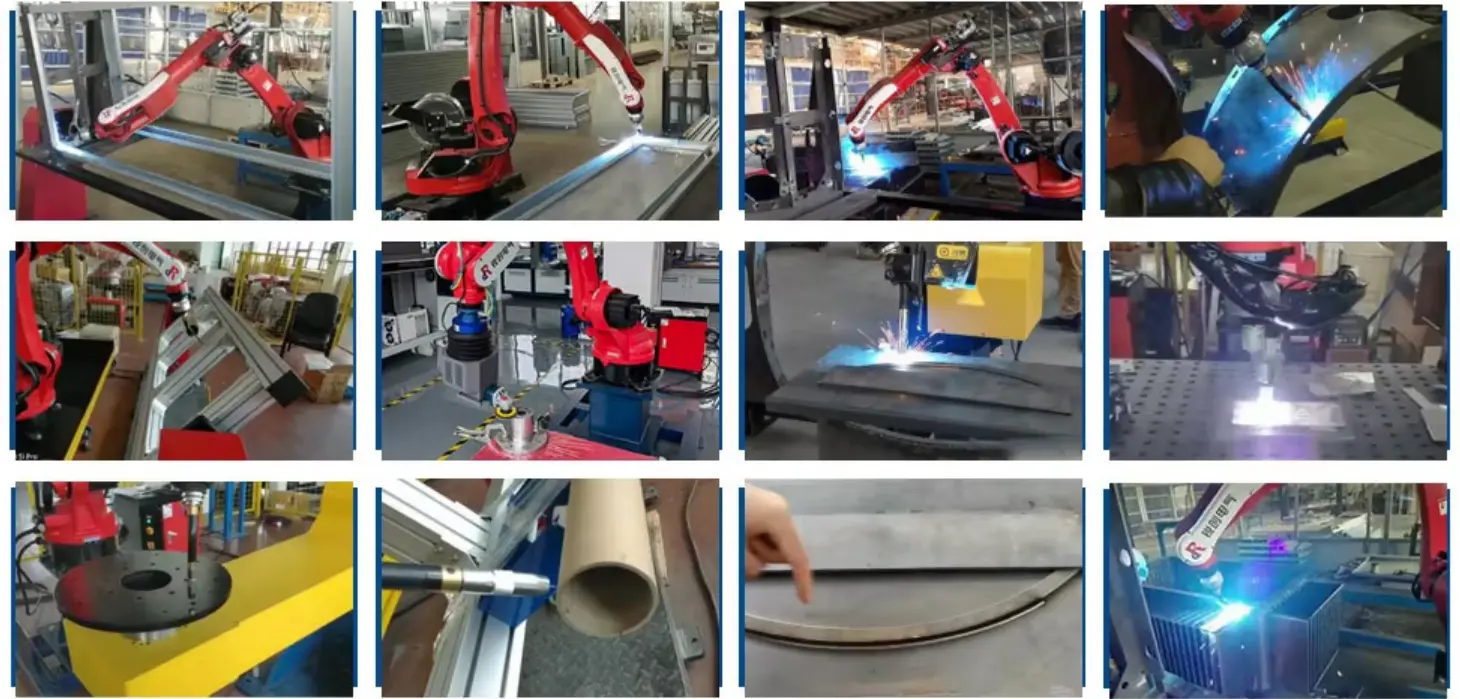
Automotive Manufacturing
High-strength thermoformed steel parts with accurate cutting and hole-piercing. These materials are cut neatly by a robotic laser system, avoiding the tool-wear problems associated with conventional press tooling.
Pipe Frames and Agricultural Equipment
Bevel cut and profile of 3D thick walled pipes, structural beams and welded frames An automatic cutting procedure may combine many manual sawing and grinding operations.
Construction & Lifting Equipment
Cutting structural metal components where edge quality and dimensional precision significantly influence structural integrity and assembly fit.
New Energy and Sheet Metal Components
Flexible processing of small-batch, multi-variety structural parts for new energy vehicles and industrial enclosures — applications where quick program switching between part types adds practical value.
Offline Programming and System Integration
Optional offline programming software lets you import 3D CAD models and generate cutting paths on a separate workstation. The robot continues production while the next program is being prepared, avoiding production stops during changeover.
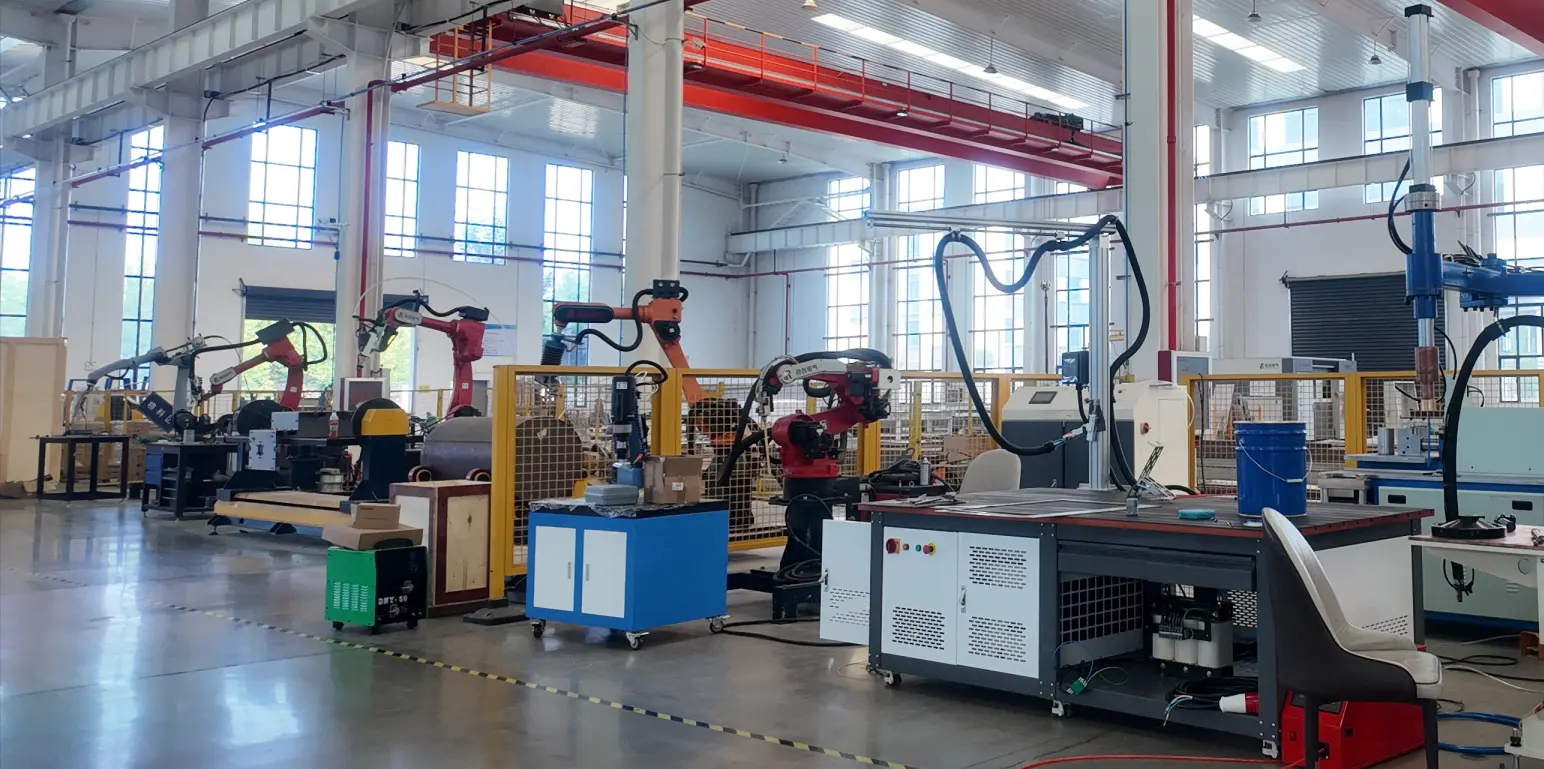
Rotary positioners and custom fixtures may be designed to accommodate your work piece geometry. The positioner spins the workpiece as the robot cuts so that it may do a complete 3D processing in one clamping without human re-fixturing between the faces.
FAQ
Q:What materials can the system process?
A:Carbon steel, stainless steel, aluminum alloy, galvanized metal, and copper alloy — including both flat profiles and formed 3D parts.
Q:What thickness range is supported?
A:Cutting thickness depends on laser power selection. Typical configurations handle 0.5 mm to 12 mm across 3D trimming, hole cutting, and chamfering operations.
Q:Is offline programming available?
A:Yes. Optional offline programming software allows you to import a 3D model, generate the cutting path on a separate workstation, and load it to the robot without stopping production.
Q:Can the system work with positioners and custom fixtures?
A:Yes. Custom fixtures and rotary positioners can be integrated so the robot completes full 3D cutting of multi-sided workpieces in a single setup.
Q:What routine maintenance does the cutting head require?
A:Regular checks include inspection of the protective window, nozzle centering verification, and calibration of the capacitive height sensor — which controls standoff distance from the workpiece surface.
Contact Us
Have a cutting application to discuss with Laser Cutting Robot? Send your material type, thickness, and part geometry to sales@lyrcautomation.com and our engineering team will follow up.