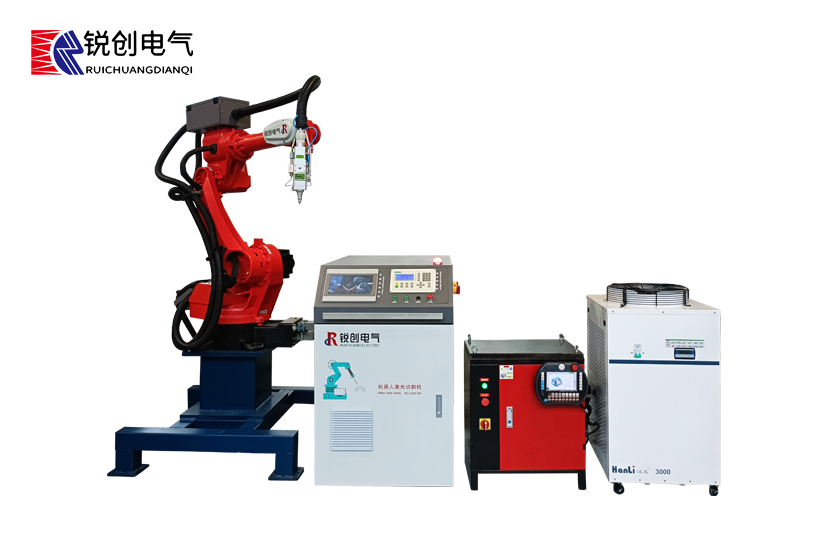
Fiber Laser Marking Machine
Machine Type: Fiber Laser Engraving Machine
Laser Power: Customized According to Application Requirements
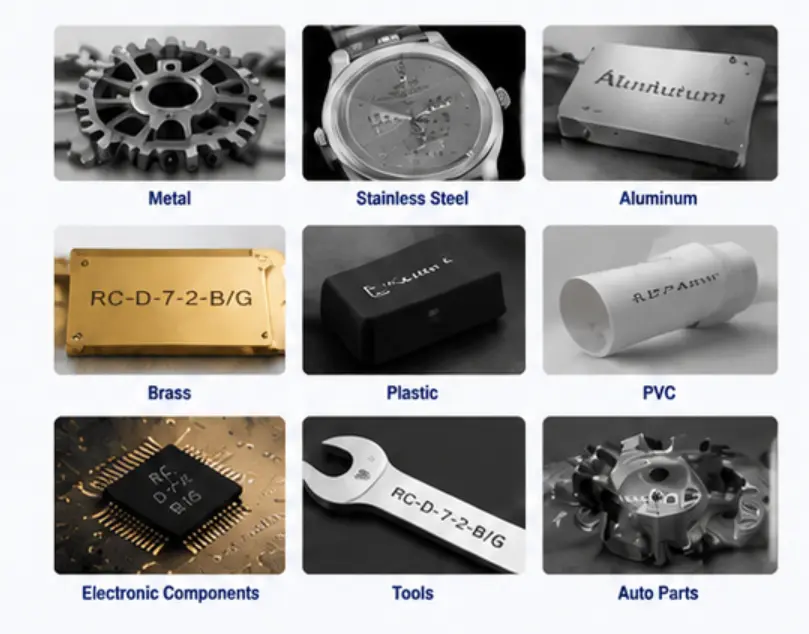
Marking Materials: Stainless Steel, Aluminum, Carbon Steel, Galvanized Steel
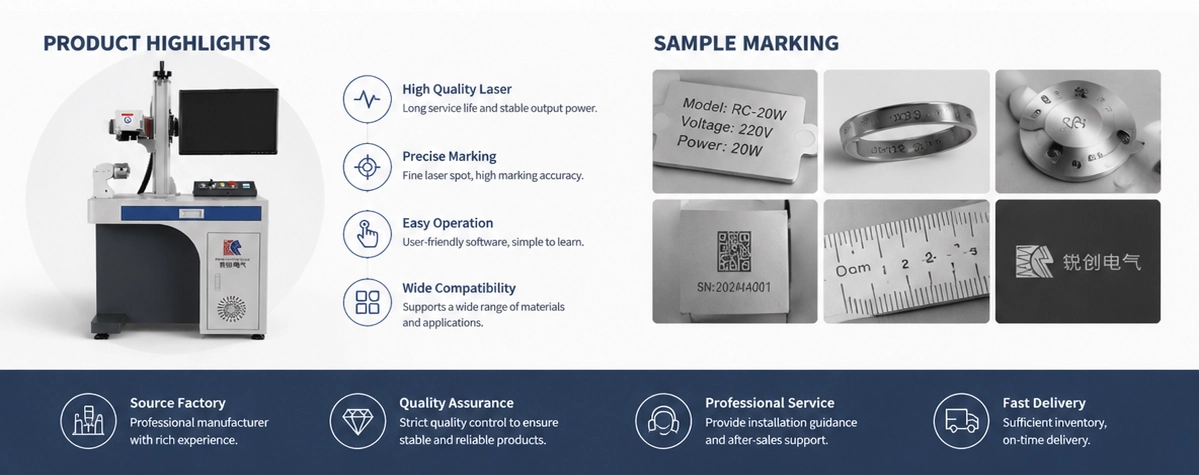
Marking Content: Logos, Texts, QR Codes, Barcodes, Serial Numbers
Processing Method: High-Speed Non-Contact Laser Marking
Fiber Laser Marking Machine for Metal Fabrication — Permanent, High-Precision Industrial Marking Solution
Luoyang Ruichuang Electrical Equipment Co., Ltd. (est. 2002) manufactures industrial-grade Fiber Laser Marking Machine systems designed for metal fabrication and batch production environments. This equipment, based on a 1064nm ytterbium doped fibre laser with M2 < 1.5 beam quality and > 30% electrical-to-optical conversion efficiency, is able to mark stainless steel, aluminium, carbon steel and galvanised steel with a repeatability of ±0.003mm. Ruichuang integrates equipment manufacture, on-site commissioning and after-sales service into a supply chain.
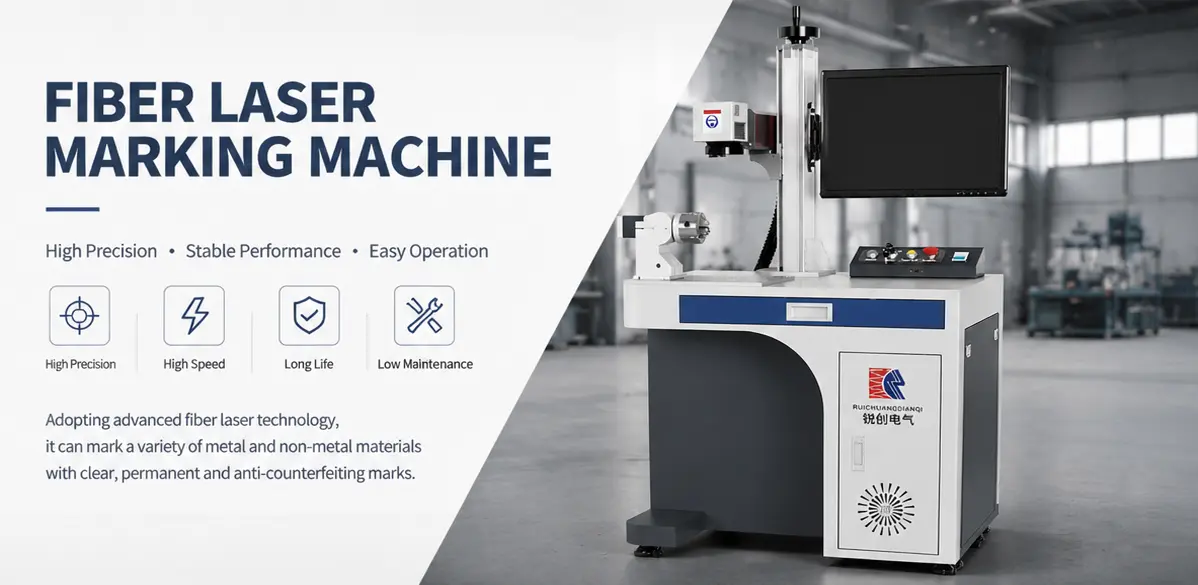
What Is a Fiber Laser Marking Machine?
The product is a high-precision CNC industrial system based on the utilization of a ytterbium-doped fiber-optic cable as the active gain medium. Produces a focused 1064nm laser beam that permanently alters the surface of the material using a non-contact thermal process – no tool marks and no ink or consumable media.
This method immediately solves frequent manufacturing difficulties. After a while the ink marking will disappear. Mechanical engraving could harm the surface of precise items. Old YAG or CO2 machines are a real maintenance issue. The fibre laser overcomes all three of these concerns. It is a zero consumable process that needs very little regular maintenance and produces marks that are resistant to wear, corrosion and typical industrial cleaning agents.
The machine also allows for the production of traceability compliant items such as UDI (Unique Device Identification) and AIAG (Automotive Industry Action Group) recommendations.
Key Technical Specifications
| Parameter | Details |
|---|---|
| Machine Type | Fiber Laser Engraving / Marking Machine |
| Laser Wavelength | 1064nm |
| Laser Power Options | 20W / 30W / 50W (custom configurations available) |
| Beam Quality (M²) | < 1.5 |
| Pulse Frequency | 20kHz – 100kHz (Q-switched standard) |
| Marking Repeatability | ±0.003mm |
| Laser Source Lifespan | ~100,000 hours |
| Electrical-to-Optical Efficiency | >30% |
| Cooling Method | Air-cooled |
| Power Supply | Single-phase 220V |
| Marking Content | Text, logos, QR codes, barcodes, serial numbers |
| Supported Materials | Stainless steel, aluminum, carbon steel, galvanized steel, coated plastics, anodized aluminum, brass, copper |
| File Format Support | PLT, DXF, AI, BMP and more |
Core Advantages
Non-contact process, no surface deformation.
The laser never physically contacts the workpiece. There is no mechanical pressure, no surface damage, and no scrap risk — relevant for thin sheet metal parts and precision components alike.
Fine marking resolution for small parts.
The micro-range focus point and ±0.003mm repeatability allow the machine to generate readable QR codes, 2D DataMatrix codes, serial numbers and logos on tiny or geometrically complicated items.
Much material compatibility.
The machine is also capable of marking coated plastics, anodised aluminium, PCB substrates, rubber, ceramic and acrylic in addition to typical metals such as stainless steel and aluminium thus it may be used in numerous production lines without reconfiguration.
No consumables, less running expenses.
The technique needs no ink, no nozzles and no new medium for regular marking. The workshop remains clean and recurrent material expenditures are avoided.
Uniform output for batch production.
Mark depth, contrast, and position remain consistent across large production runs, supporting part traceability and quality documentation requirements.
Extended laser source service life.
The laser source is rated at approximately 100,000 hours. Routine maintenance is limited to keeping the F-theta lens free of dust and particulate contamination.
Quality Control Standards
Each fiber laser marking machine undergoes inspection before shipment:
- Power Stability Test — Output monitored over a 24–48 hour period, with fluctuation maintained within ±1%.
- Beam Profile Analysis — A beam profiler verifies TEM00 mode and Gaussian distribution.
- Galvanometer Calibration — Geometric accuracy is verified across the full F-theta lens field using 0.01mm resolution measurement tools.
- Environmental Resistance Testing — Marked samples are tested under Salt Spray (ASTM B117) and Cross-cut Adhesion procedures.
- Fiber Integrity Check — The delivery fiber is inspected for micro-bends or cladding anomalies prior to dispatch.
Machine design refers to CE marking standards, FDA (CDRH) laser safety categories, and ISO 11553-1 for laser-based material processing. Buyers should verify the certification standards that apply to their particular market and application.
Typical Application Scenarios
Automotive component traceability.
Engine blocks, chassis parts and gearbox housings may be marked directly using 2D DataMatrix codes. The product markings are readable even after heating, oil and aggressive industrial cleaning techniques.
Production of medical devices.
The machine can UDI-mark surgical grade stainless steel (316L) in black marking or annealing modes. These methods change the colour of the surface by oxidising the surface, not by removing material from the surface. This is important for devices that need to be corrosion resistant after marking.
Aerospace and defence parts.
The non-contact procedure may be used for marking titanium and aluminium components without mechanical stress being introduced to the substrate. Buyers should verify for themselves that applications in this industry often necessitate extra material and process certification criteria.
Electronics & Sheet Metal Fabrication.
Part numbers, barcodes and brand IDs may be added to enclosures, control panels, PCBs and precision hardware for traceability and identification.

Power Options — How to Choose
| Power | Best For |
|---|---|
| 20W | Shallow marking on thin metals and plastics |
| 30W | General metal marking, logos, serial numbers |
| 50W | Deep engraving, harder metals, higher throughput |
The 50W is more feasible for high-volume manufacturing or for materials like as tool steel and thick carbon steel. 20W or 30W is enough for most typical applications such as electronics labelling and ordinary sheet metal production.
FAQ
Q:What materials can the product mark?
A:It marks metals including stainless steel, carbon steel, aluminum, brass, copper, and galvanized steel. It also works on coated plastics, anodized aluminum, and metal-plated surfaces.
Q:Is the laser mark permanent?
A:The laser physically alters the material surface. Marks produced this way are wear-resistant and corrosion-resistant under normal operating and cleaning conditions.
Q:What file formats does the software support?
A: The program supports standard formats like as PLT, DXF, AI, BMP and so forth. Input types include text strings, serial numbers, QR codes, bar codes and imported visuals.
Q: How do I know what power level to use?
A: For shallow marking on common metals and thin gauge materials, use 20W or 30W. Select the 50W for deeper engraving, quicker cycle times or tougher substrate materials.
Q:What power supply do you need?
A: Standard single phase 220 V. The machine is air-cooled and does not need separate utility connections other than regular workshop electricity.
Q:How about the maintenance of the machine?
A: The laser source is rated for ~100,000 hours. Cleaning the F-theta lens is part of routine maintenance. No consumable media change needed for ordinary operation.
Contact Us
Have a marking application to discuss with Fiber Laser Marking Machine? Reach our team at sales@lyrcautomation.com for technical consultation and product information.