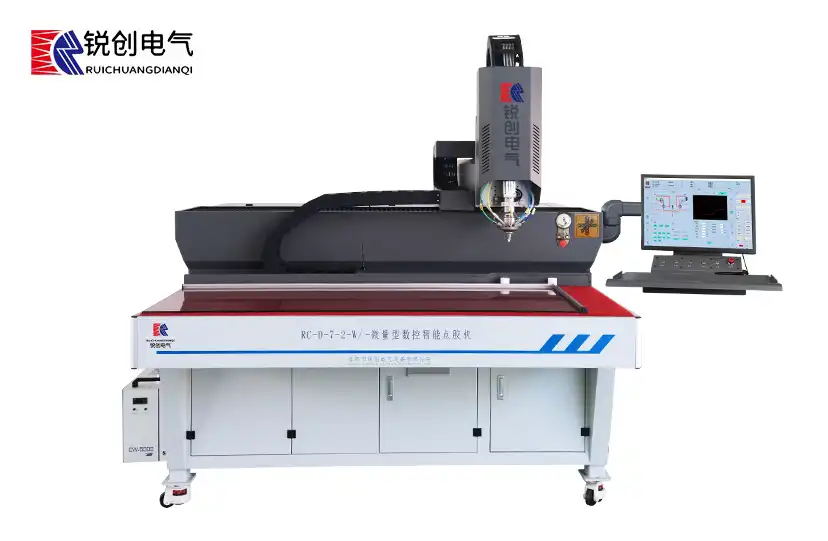
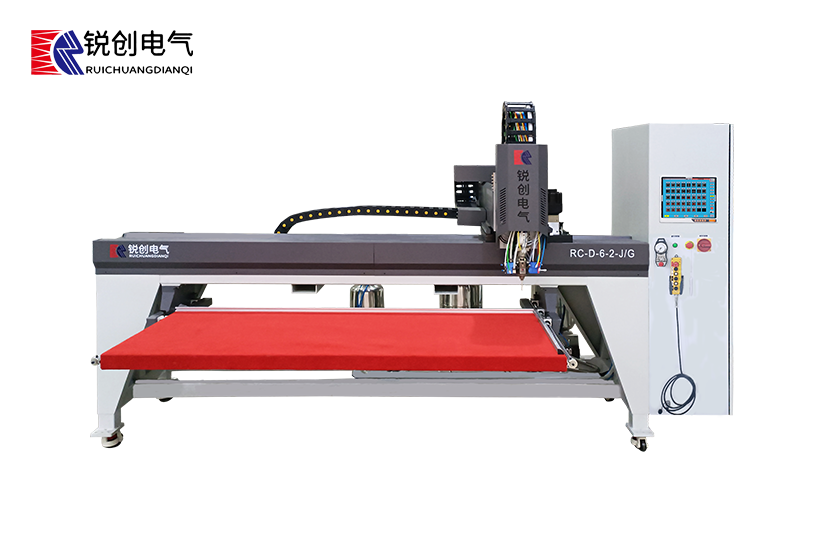
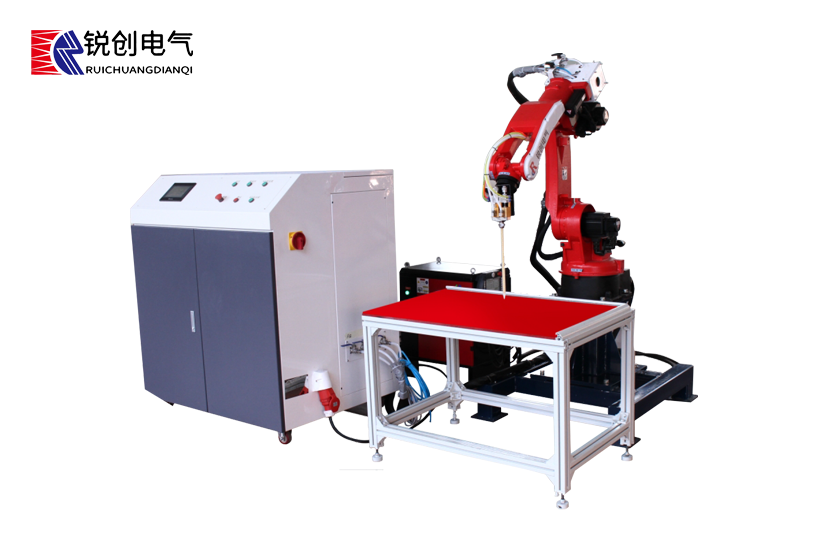
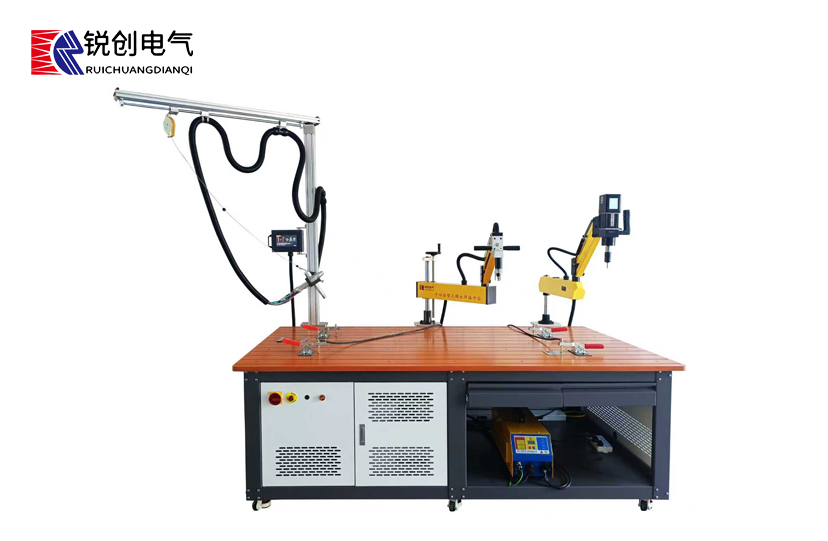
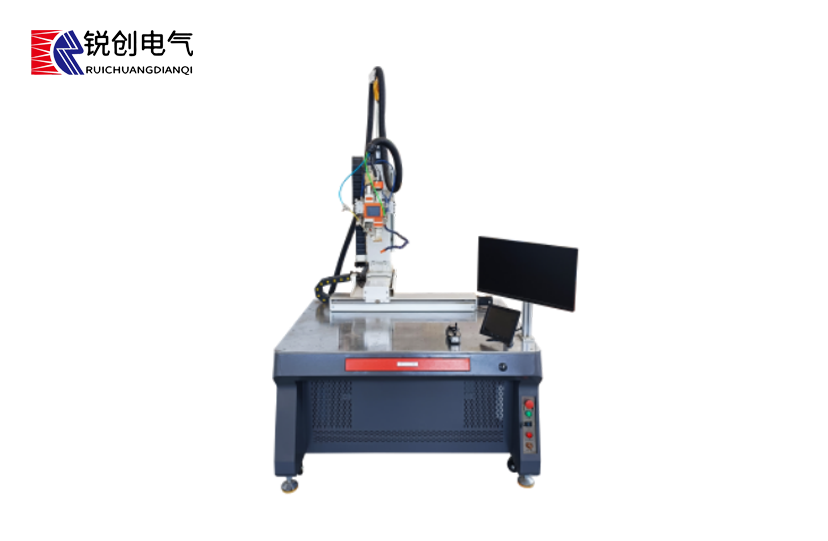
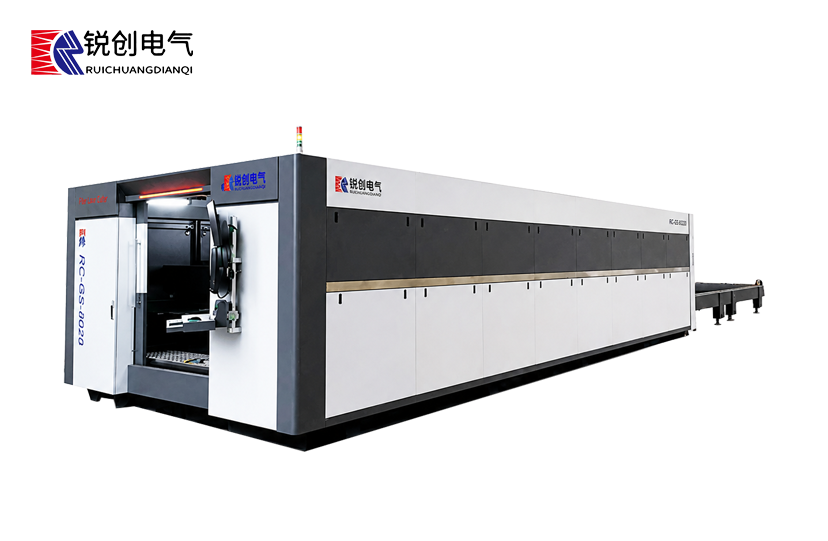
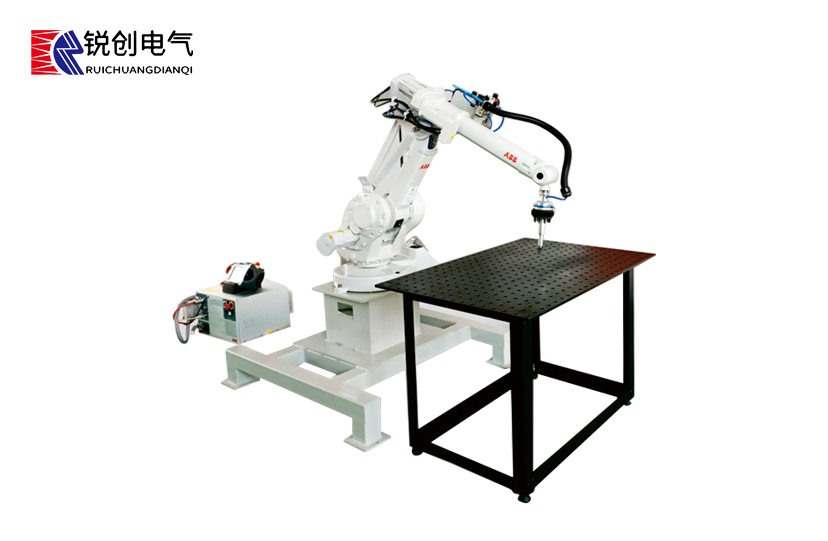
Spot Welding Platform
Welding Type: Resistance Spot Welding
Welding Thickness: Suitable for Thin and Medium Sheet Metal
Welding Materials: Carbon Steel, Stainless Steel, Galvanized Steel, Aluminum (According to Configuration)
Operation Mode: Manual / Automatic Control Options
Welding Speed: Fast Spot Welding for Efficient Production
Applications: Widely used for welding sheet metal components such asaluminum, mild steel, stainless steel, andgalvanized sheet metal.
Spot Welding Platform for Sheet Metal Fabrication — Stable Output, Precise Control & Fast Changeover
Luoyang Ruichuang Electrical Equipment Co., Ltd. (est. 2002) has spent over two decades developing sheet metal automation equipment. Our Spot Welding Platform is built for resistance spot welding of carbon steel, stainless steel, galvanized steel, and aluminum, handling combined sheet thicknesses from 0.3 mm to 3 mm. Accurate current and pressure management, real-time parameter monitoring and a modular fixture design allow production teams to minimise rework, decrease labour reliance and maintain constant cycle durations for both manual and automated operating modes.
What Is a Spot Welding Platform?
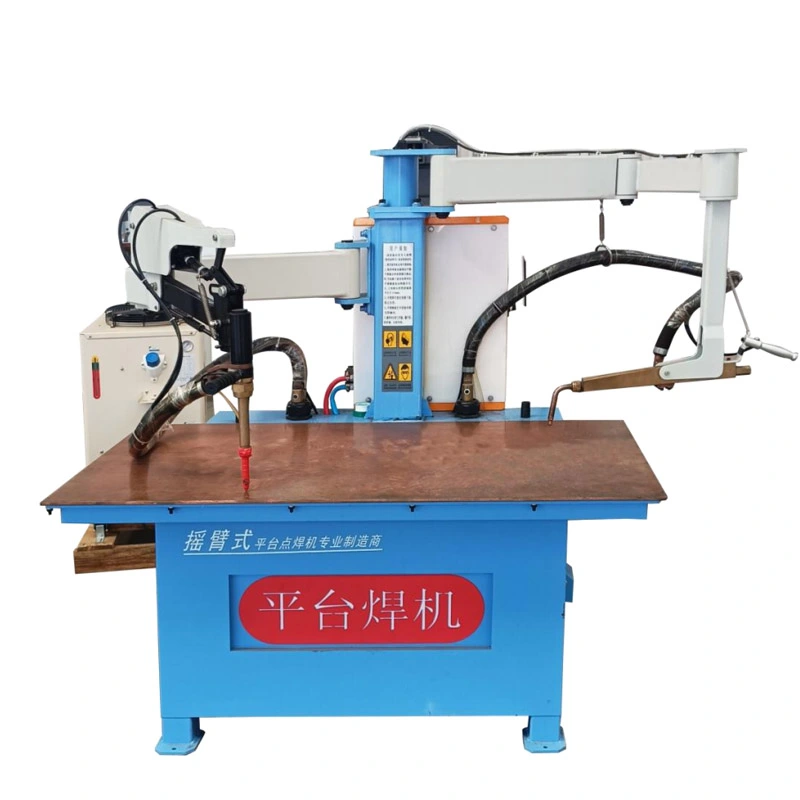
The resistance product is an industrial workstation that binds overlapping metal sheets by localised heat created by electrical resistance. The two copper electrodes provide a regulated force and current at the place of interest. This melts the contact zone and creates a solid weld nugget. No filler material, no pre-drilling needed.
Unlike handheld spot welders, a platform-based system combines mechanical fixtures, electrode handling and power control into a single, robust structure. This combination tackles typical production issues such as heat distortion in narrow gauge sheet metal, variable nugget size due to pressure variation and human labour expenses associated with repositioning jigs.
Key Technical Specifications
| Parameter | Specification |
| Model | RC-DB-170W |
| Rated Capacity | 170KVA |
| Input Power | 3Φ380V |
| Rated Frequency | 1000HZ |
| Welding Gun Type | Horizontal Welding Gun |
| Welding Gun Length | 390mm |
| Maximum Welding Capacity | 42000A |
| Duty Cycle | 20% |
| Electrode Pressure | 2000N |
| Air Pressure | 0.6Mpa |
| External Dimensions (L×W×H) | 2000×1000×2329mm |
| Table Size | 1500×800/600mm |
| Note | Table size can be customized according to user requirements. |
| Material | Thickness |
| Low Carbon Steel | 3.0+3.0mm |
| Aluminum Plate | 2.0+2.0mm |
Platform Design and Build Quality

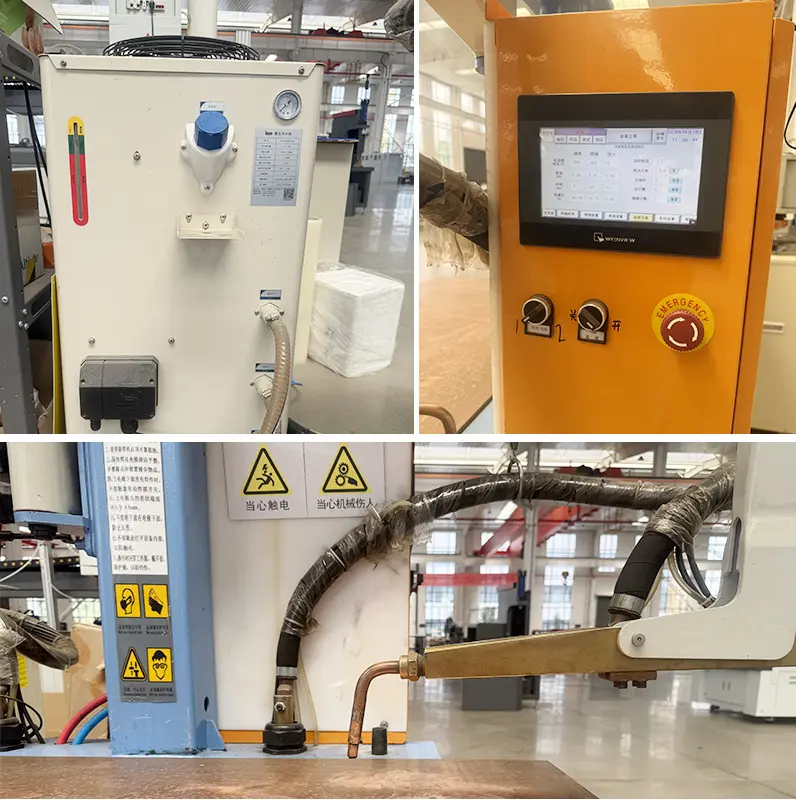
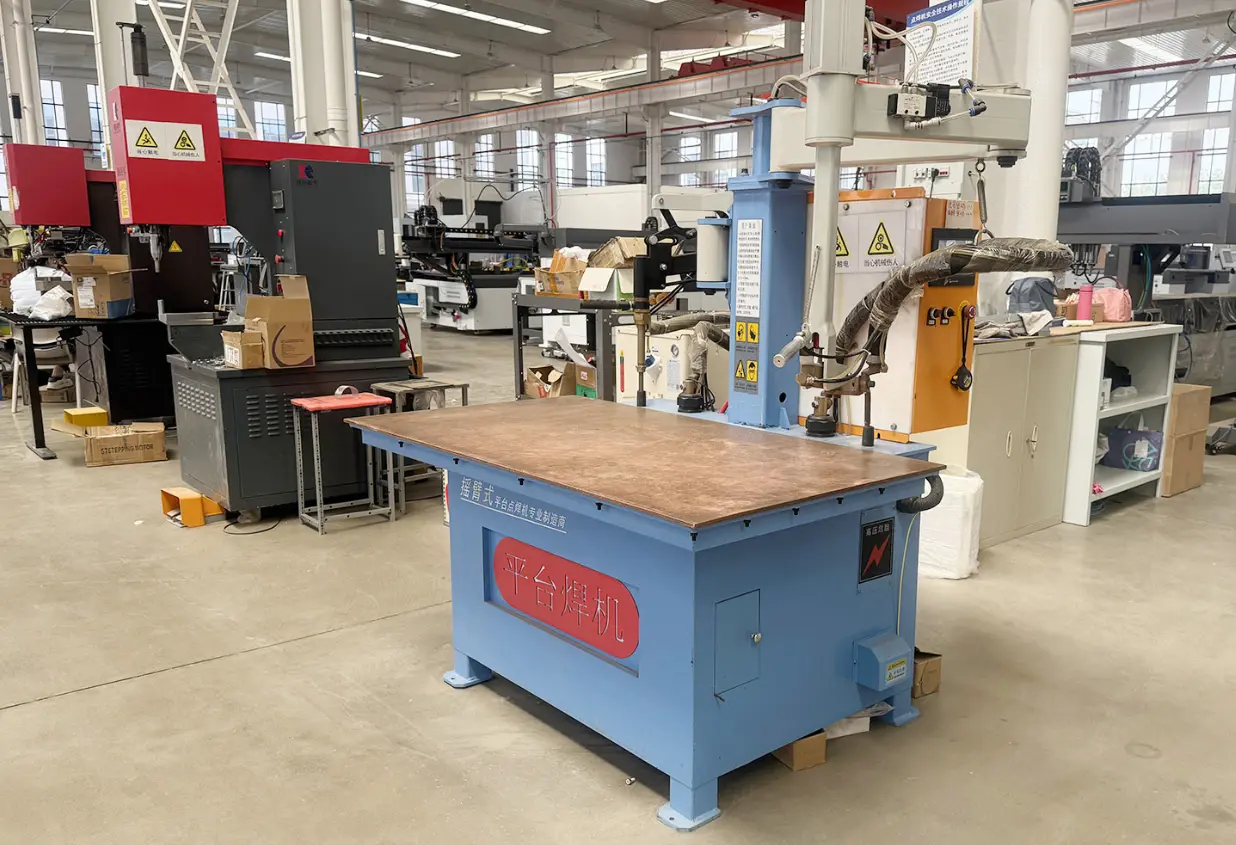
The frame is made of robust steel for structural stability in continuous manufacturing cycles. The sturdy frame provides continuous electrode contact, which directly contributes to weld nugget homogeneity.
The electrode tips are made from Chrome Zirconium Copper (CuCrZr) because this material provides a good balance of high electrical conductivity and resistance to heat. The closed loop water cooling system maintains the electrode temperature in a specified working range, hence minimising the tip deterioration over time and increasing the electrode service life.
The secondary circuit has low impedance so as to prevent shunting effects . This is important when welding pieces with several weld spots that are close together .
Accurate control for consistent welds
The computerised controller can hold a number of welding programs. Operators may choose parameter settings for varying material kinds and sheet thicknesses without manual recalibration each time, decreasing the setup time needed when switching between product runs.
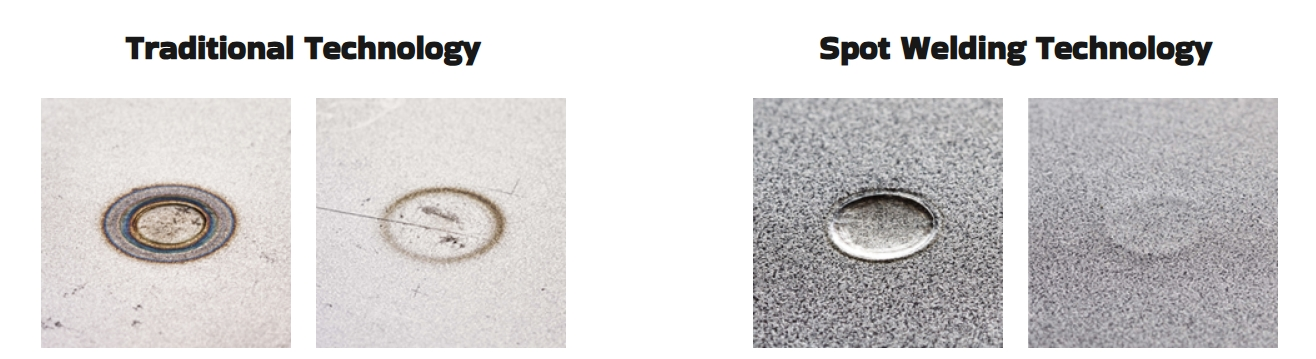
Current and pressure setting are independent of each other. Heat is concentrated at the weld point minimising surface marking and sheet distortion. For materials such as galvanised steel, whose electrodes wear out faster a real time monitoring system warns the operator when the parameters are beyond the prescribed range.
Welding monitoring built in monitors parameters throughout each cycle and prompts alarms before bad welds pile up, providing production teams the knowledge they need to respond before reject rates increase.
Modular Fixture System for Fast Product Changeover
The modular platform design permits fixture change over for various workpiece types. The fixture module may be changed out and the stored program can be loaded with the current configuration. No need to rebuild the whole setup.
This flexibility makes it ideal for job shops and contract manufacturers with varied product lines. That same platform may be built for sheet metal enclosures, battery assembly components or hardware brackets, with table size and electrode arrangement preset to part specifications from day one.
Applications Across Industries
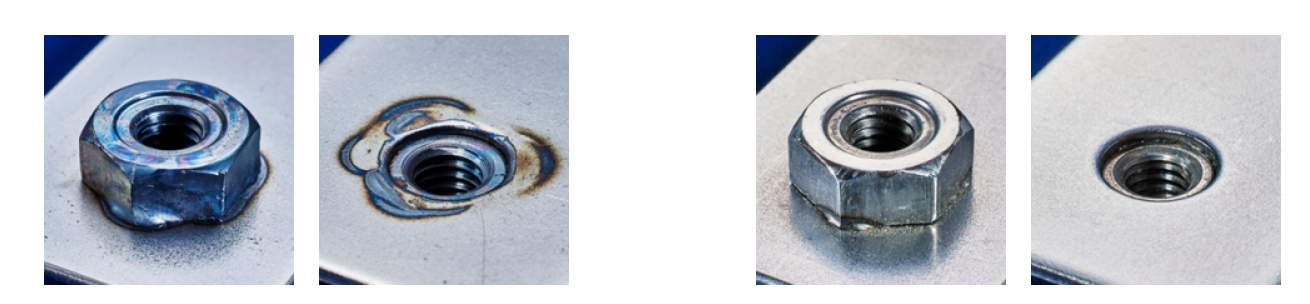
This Spot Welding Platform is used in sheet metal fabrication environments where join quality, cycle consistency, and low distortion are production requirements:
- Sheet Metal Enclosures — electrical cabinets, control panels, and industrial housings
- Battery Pack Assembly — joining nickel-plated components and sheet metal cells
- Automotive Parts — body panels, brackets, and structural sheet metal components
- Hardware and General Fabrication — mild steel, stainless steel, and galvanized parts for industrial applications
- HVAC and Appliance Manufacturing — thin-gauge steel components where clean, low-distortion welds are needed
Operator Safety and Running Costs
The platform is equipped with safety protection devices to avoid harm to the operator during normal and abnormal working situations. The system may be operated by normal trained operators without the need for specialised welding knowledge.
The material CuCrZr and the design of the cooling system allow to control the electrode consumption. For exact electrode service life numbers for your material and cycle circumstances, please contact us directly – estimations are application-specific and cannot be generalised without knowledge of your manufacturing parameters.
FAQ
Q: What are the appropriate materials for this platform?
A: The platform works with carbon steel, stainless steel, galvanised sheet, nickel sheet and low alloy thin metal. Typical applications include sheet metal enclosures, battery packs and hardware manufacturing.
Q:What is the maximum sheet thickness?
A:Standard models cover combined thicknesses from 0.3 mm to 3 mm. For thicker material, custom heavy-duty configurations are available.
Q:Will spot welding damage the surface or cause visible deformation?
A:With correct current and pressure settings, heat is concentrated at the weld spot. Surface marking and sheet deformation are kept low when parameters are properly configured for the material.
Q:Do I need to pre-drill holes?
A:No. The two workpieces are joined by localized melting at the contact point. No pre-drilling or additional pre-processing is required.
Q:How do I switch parameters between products?
A:The digital controller stores multiple programs. Switching between saved parameter sets for different sheet thicknesses or materials does not require specialized setup expertise.
Q:How do I reduce spatter?
A:Spatter is typically caused by insufficient electrode force or excessive current. Match pneumatic pressure settings to material thickness and clean electrode tips regularly to remove surface oxides.
Contact Us
Have a question about the Spot Welding Platform or need a custom configuration? Send your requirements to sales@lyrcautomation.com and our team will follow up.