PU Foam Gasket Machine
Technology: FIPFG Foam Sealing Technology
Material: PU Two-Component Foam
Working Area: 1200 × 600 × 220 mm
Gasket Width: 5–30 mm
Application: Electrical cabinets, automotive parts, EV battery packs, industrial enclosures
Certificate: CE, ISO9001
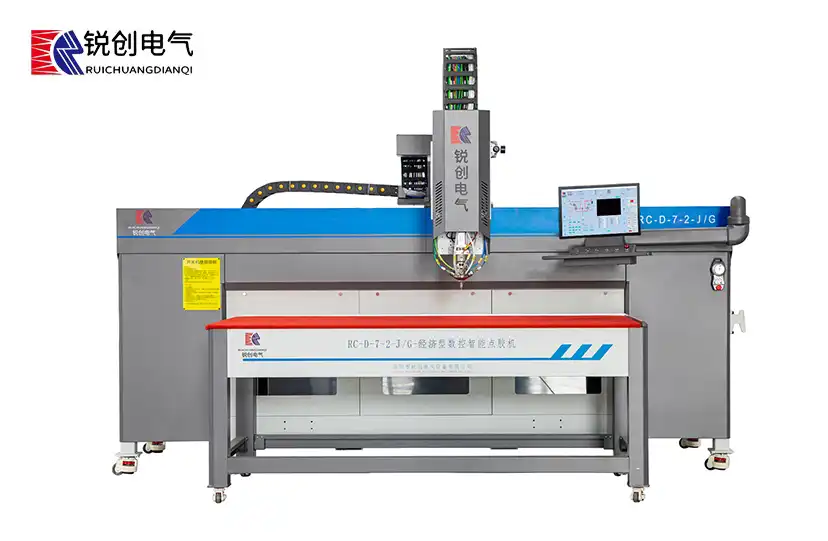
PU Foam Gasket Machine (FIPFG) for EV Battery Packs & Industrial Enclosures | RC-D-7-2-W
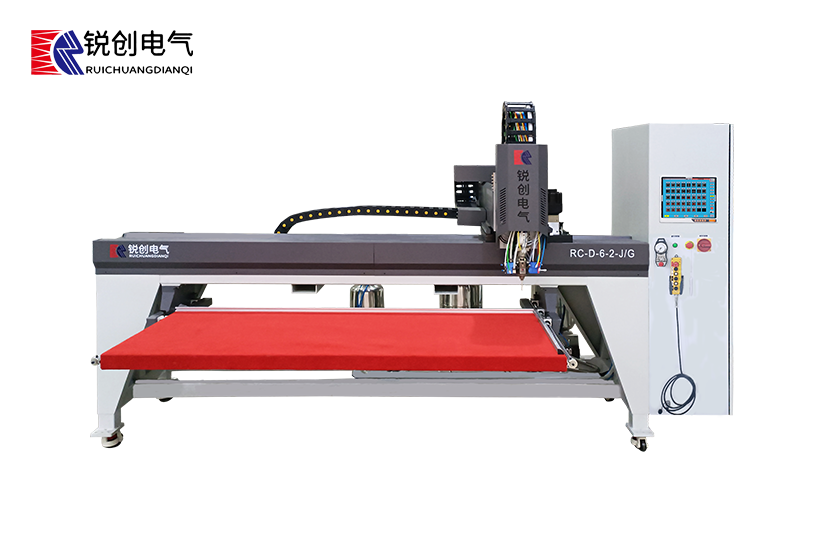
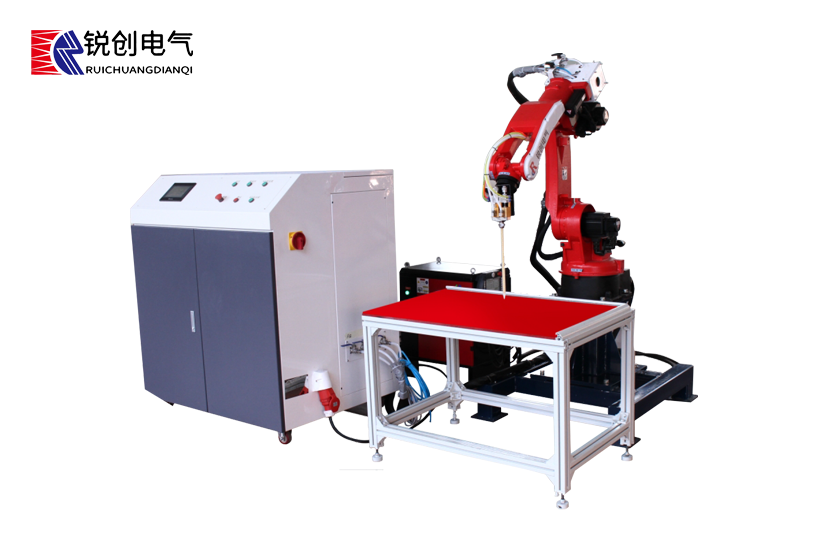
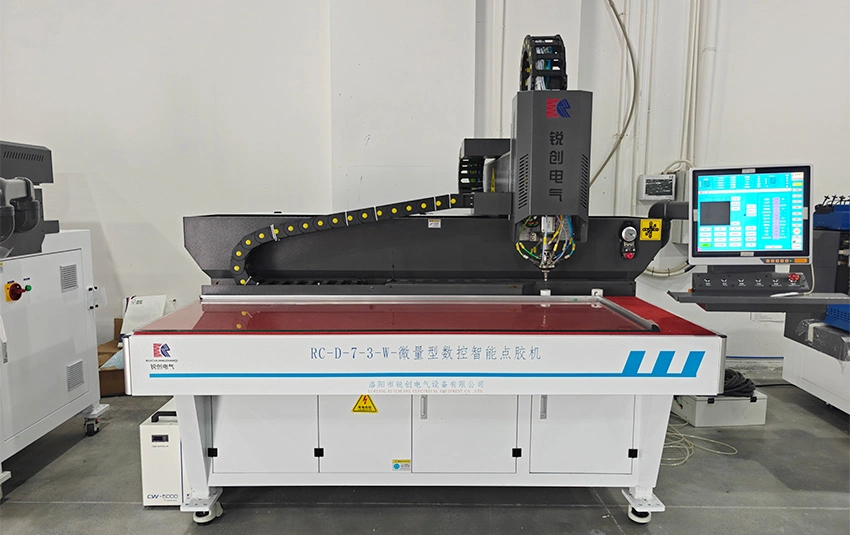
The RC-D-7-2-W PU Foam Gasket Machine uses FIPFG technology to dispense two-component PU foam directly onto parts, forming seamless, flexible gaskets in place — no cutting, no splicing, no manual placement. It has a 1200 × 600 × 220 mm working surface and ±0.02 mm positional repeatability, and offers IP65–IP68 sealing for electrical enclosures, EV battery packs and automotive components. CE and ISO 9001 certified, made by Ruichuang since 2002. Proven to save material waste and labour expenses 30-50% vs standard gasket techniques.
What Is the PU Foam Gasket Machine?
This product is also termed a FIPFG (Formed-In-Place Foam Gasket) system. The product dispenses liquid two-component polyurethane foam onto a work piece surface. A precision mixing head mixes the two components, A (resin) and B (hardener), to a regulated ratio (±1%), which then expands and cures to a soft, robust foam seal that is attached directly to the substrate.
No joints, no adhesive lines, no gaps from hand placement mistake as with pre-cut rubber gaskets. The foam chemically attaches to powder-coated steel, ABS plastic, aluminium and similar materials to create a continuous seal that performs the same on every unit manufactured.
Why manufacturers switch to FIPFG:
- ❌ High labor cost of cutting and placing rubber gaskets → ✅ Automated, repeatable dispensing
- ❌ Inconsistent seal quality from manual assembly → ✅ ±0.02 mm path repeatability
- ❌ Material waste from die-cutting → ✅ Exact-volume dispensing with near-zero waste
Key Features of the RC-D-7-2-W
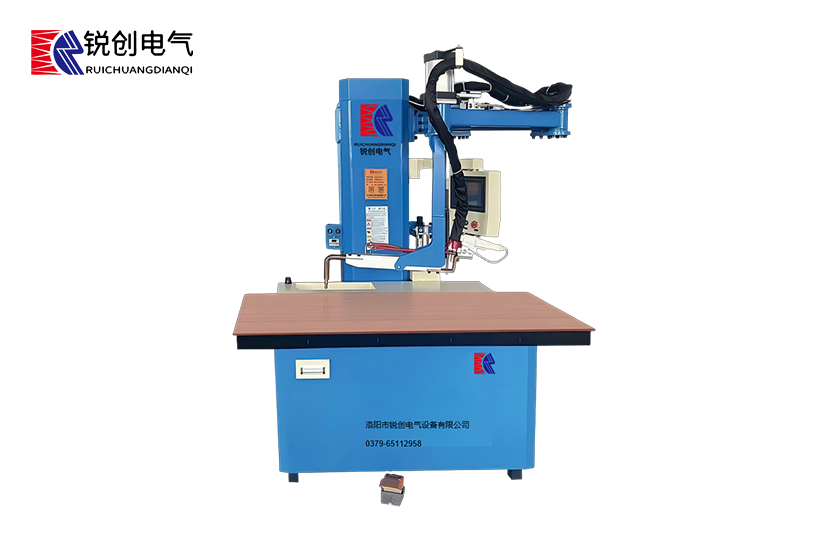
Integrated Cantilever Frame
The machine body and work platform are fabricated as one welded element, not fastened together. This prevents frame flex in use, keeps the axs aligned over time and allows the device to be moved across production lines without re-calibration.
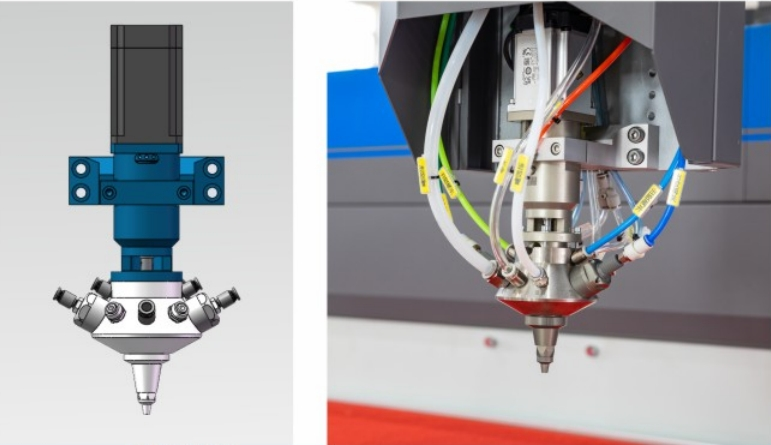
RC-600 / RC-700 Mix Head
Both mixing heads are compatible with optional A1/A2/B glue tanks. One-click material switching lets operators swap foam formulas in less than 60 seconds – minimising downtime when transitioning between part families or foam hardness classes.
Bus Motion Controller + Self-Developed Software
Three programming methods are supported:
- Template input — for standard part geometries
- CAD file import — direct path generation from DXF/DWG files
- Handheld teaching — manual path tracing for complex or irregular shapes
No external programming software license required. All path data is stored on the machine controller.
Precision Dispensing Control
Glue width is adjustable from 2–10 mm (standard) or 1.8 mm (in-groove). Mixing ratio is held within ±1% by gravimetric weight checks on both components. This precision is what makes consistent IP68 sealing achievable — not just possible in ideal conditions.
Automatic Nozzle Cleaning System
After each dispensing cycle, a timed flushing sequence clears residual foam from the mixing head. This prevents material curing inside the nozzle — a common failure point on competitor systems that require manual cleaning between shifts.
Technical Specifications
| Machine Model | Working area (X*Y*Z) | Glue Output | Strip width | Strip height | Cleaning method | Application |
| RC-D-7-2-W | 1200*600*200(mm)) Three-axes linkage; Customized working area is available |
0.5-3.2g/s | 4-15mm | 3-7mm | High pressure multi-point water flush | Filters, LED lights, industrial locks, automotive components, electronic and electrical, communication, explosion-proof products, household appliances, etc |
Application Scenarios
EV Battery Packs
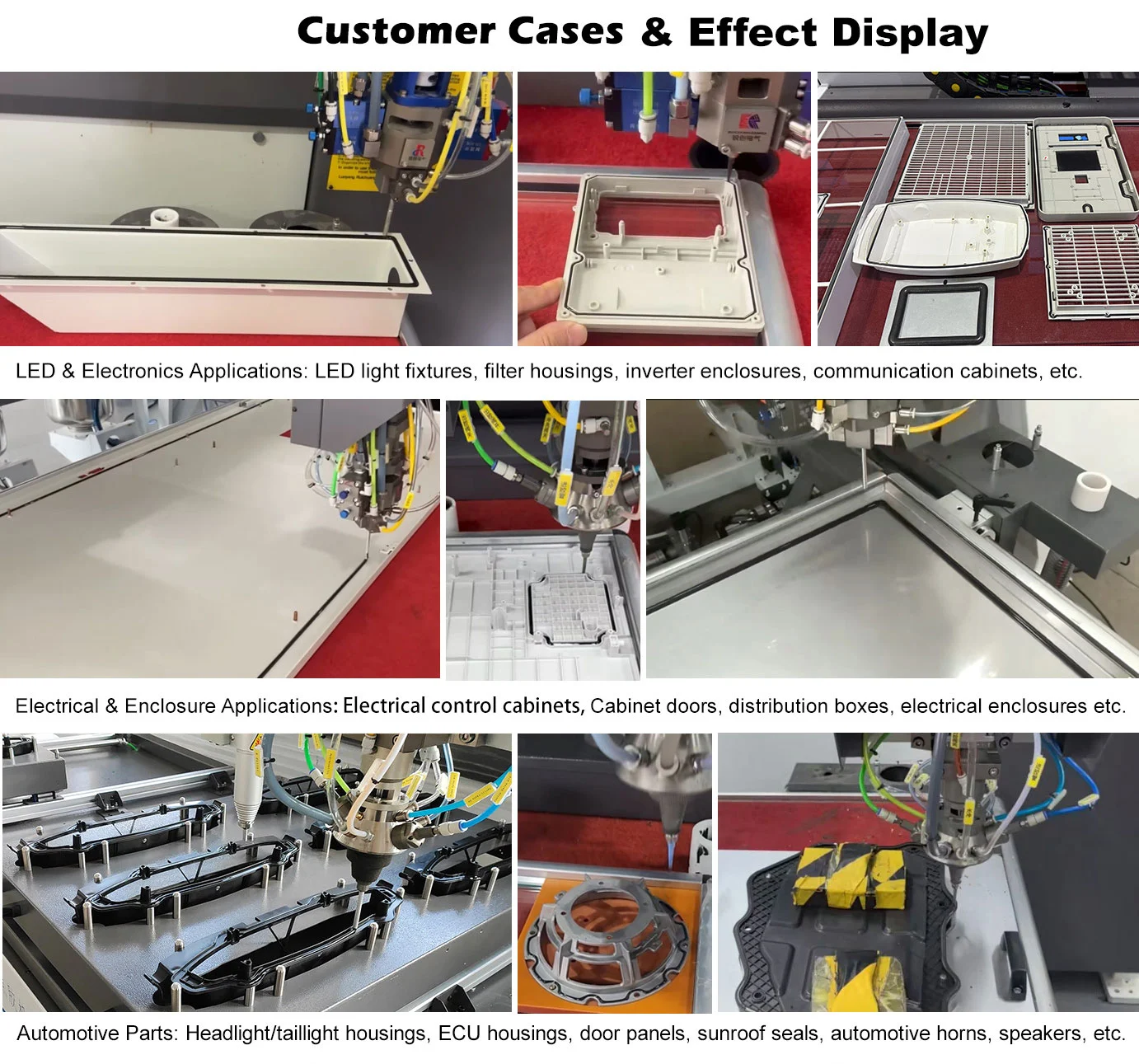
Battery enclosures must be sealed to endure vibration, heat cycling from -40C to +85C and long term compression without relaxation. The RC-D-7-2-W directly binds PU foam to aluminium or steel housing flanges, preserving IP67/IP68 integrity throughout the battery service life. No re-gasketing at normal maintenance periods.
Electrical Enclosures & Control Cabinets
FIPFG foam-sealed cabinet doors and panels retain IP66 or IP68 ratings in applications where they encounter dust, humidity and chemical vapours. Precut gaskets on rectangular enclosures are prone to corner leaks, which are eliminated by a continuous bead.
Automotive lighting and components
Taillight housings, junction boxes and plastic battery covers need to be sealed to a curve or uneven perimeter with no gaps. CAD imported dispensing pathways follow accurate part geometry – including bends, radii and variable width portions that are impracticable with cut gaskets.
Enclosures Industrial & Outdoor
FIPFG is the only realistic way to consistently provide IP-rated seals in volume for outdoor LED lights, telecom housings, instrumentation enclosures with non-standard geometry.
Quality Control Process
Every RC-D-7-2-W machine undergoes functional validation before shipment. Gasket output quality is verified through:
| Test | Standard | What It Checks |
|---|---|---|
| Compression Set | ISO 815 | Foam returns to original thickness after 72-hour load |
| Bead Geometry | Laser scan | Height/width consistency across full dispensing path |
| Adhesion Strength | Pull test | Bond integrity on steel, ABS, and aluminum substrates |
| Water Ingress | IEC 60529 | IP68 verification at 1.5 m depth, 30 minutes |
| Mixing Ratio | Gravimetric | A:B ratio held within ±1% across full production run |
Gaskets produced on this system of PU Foam Gasket Machine have demonstrated 15+ year service life in accelerated aging tests conducted to IEC 61439 environmental exposure protocols.
Why Ruichuang — Not Just Another Equipment Supplier
Since 2002, Luoyang Ruichuang has focused exclusively on industrial dispensing and sealing automation. This specialization means the engineering team understands not just the machine, but the sealing requirements of your parts.
What you get beyond the machine:
| Included | Details |
|---|---|
| Installation & Commissioning | On-site by Ruichuang engineers |
| Operator Training | Hands-on, on-site or remote |
| Software Updates | Lifetime updates for self-developed control software |
| After-Sales Support | Dedicated service contact, response within 1 business day |
| Training Center Access | PLC programming and robot operation courses available |
Measured cost impact vs. traditional rubber gasket processes:
- Labor reduction: 40–50% (elimination of manual placement, trimming, inspection)
- Material waste reduction: 30–40% (exact-volume dispensing vs. die-cut offcuts)
- Reject rate reduction: Typically 60–80% reduction in seal-related defects in customer implementations

FAQ
Q:What foam materials does the machine dispense?
A: The RC-D-7-2-W is intended for two-component polyurethane (PU) foam. The A (polyol) and B (isocyanate) components are combined in the dispensing head at a carefully regulated ratio and applied directly to the surface of the part where they expand and cure in situ. Other two-components formulations may be tested on request.
Q:The gasket can reach what level of IP protection?
A: IP65, IP66, IP67 and IP68 are all possible depending on flange shape, compression ratio and foam composition. IP68 (1.5 m, 30 min per IEC 60529) is frequently tested on customer products during commissioning.
Q:Can FIPFG replace traditional adhesive-backed rubber gaskets?
A:Yes — and with measurable quality improvement. Because the foam is formed in place, there are no splice joints, no adhesive-bond weak points, and no placement errors. Field data from customers who have converted from cut gaskets typically shows a 60%+ reduction in seal-related warranty returns.
Q:Can the machine handle different gasket profiles on the same production line?
A:Yes. Gasket width, height, and path geometry are all defined in software. Switching between part programs takes under 2 minutes. No tooling change is required.
Q:What is the typical curing time before handling?
A:At standard conditions (23°C, 50% RH), foam is tack-free in 2–10 minutes and reaches functional handling strength in approximately 2 hours. Full cure (for final IP testing) completes within 24 hours. In temperature-controlled environments above 30°C, cure times shorten proportionally.
Q:How long does installation and commissioning take?
A:Standard installation and commissioning typically requires 3–5 business days on-site, including operator training. Timeline varies based on part complexity and number of initial programs to be loaded.
Contact Us
Get a quote or technical consultation — email sales@lyrcautomation.com. We respond to PU Foam Gasket Machine within one business day.