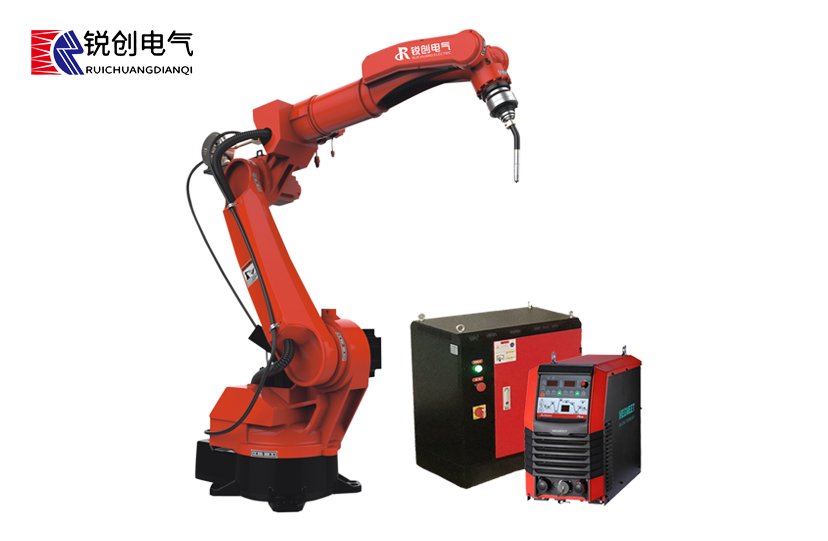
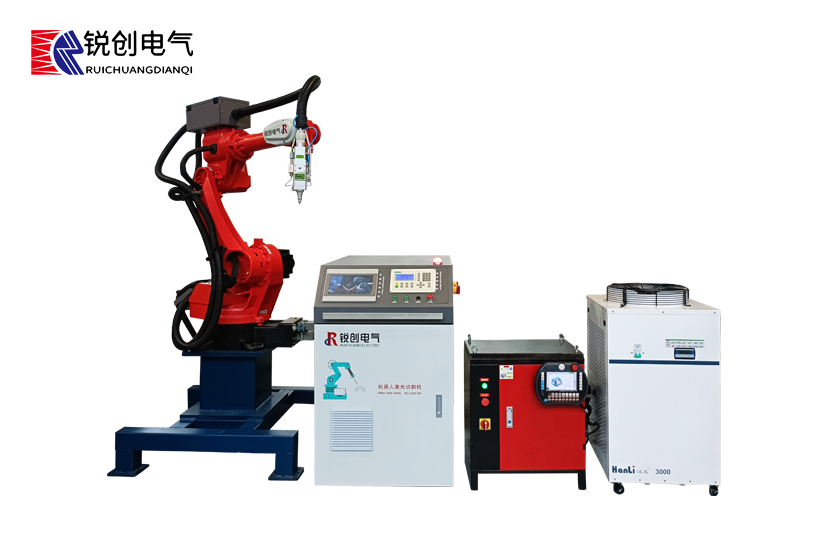
Gluing Robot
Key Features:
✅ High-precision adhesive dispensing for complex surfaces
✅ Consistent glue lines with reduced material waste
✅ Suitable for continuous and automated production
✅ Flexible programming for different products and designs
✅ Improves sealing and bonding quality
Gluing Robot — Automated Adhesive Dispensing System for Precise Industrial Bonding
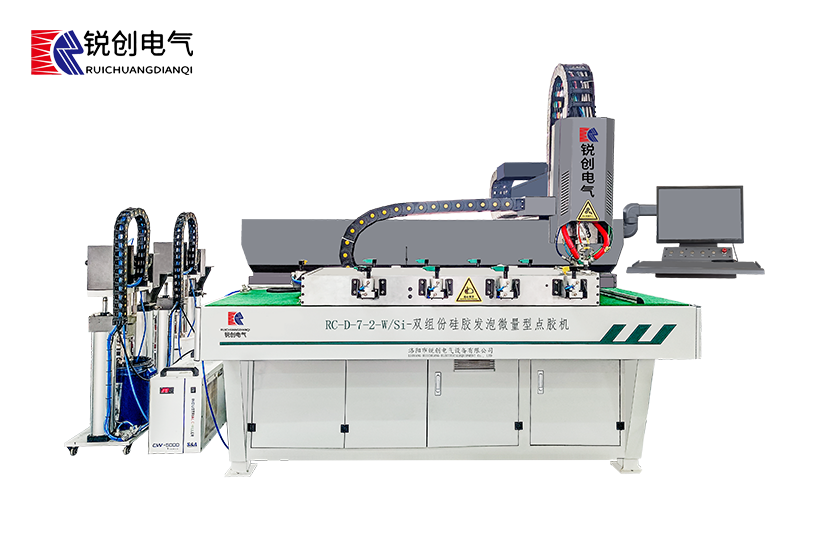
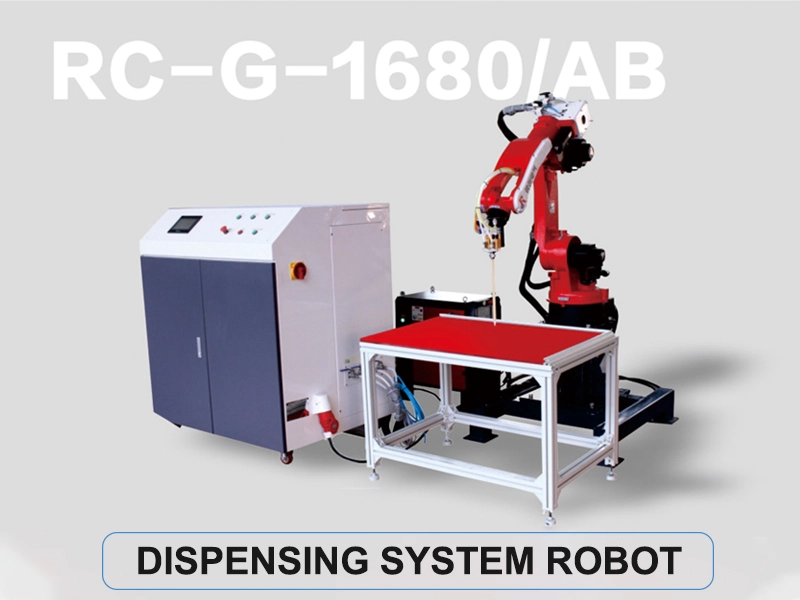
Industrial adhesive application demands repeatability that manual methods cannot consistently deliver. A Gluing Robot from Luoyang Ruichuang Electrical Equipment Co., Ltd. addresses this by combining six-axis robotic movement with closed-loop dispensing control, achieving mechanical repeatability of ±0.02 mm to ±0.05 mm. The device is capable of applying sealant, foam glue and thermal conductive adhesives across complicated 3D surfaces, interfaces directly into existing conveyor lines and can run continuously with less material waste – including up to 25-30% adhesive savings compared to human application.
What Is a Gluing Robot?
This device is an automated system for distributing glue, sealant or resin with consistent bead shape along programd routes utilising a six axis industrial arm or Cartesian gantry.
Compared to a person a robot can control at the same time the speed, the glue pressure and the valve opening. This assists in uniform bead width and thickness from first portion to last minimising underfill, overflow and rework. It also decreases worker exposure to hazardous VOCs in constrained manufacturing environments.
Luoyang Ruichuang has been involved in the design and production of industrial automation equipment since 2002, including robot application engineering, manufacturing, installation and commissioning and after-sales servicing of the complete life cycle of the equipment.
Key Technical Specifications
| Parameter | Details |
|---|---|
| Robot Type | 6-Axis Industrial Arm |
| Repeatability | ±0.02 mm – ±0.05 mm |
| Applicable Materials | Sealant, adhesive, foam glue, thermal conductive glue |
| Viscosity Range | Water-thin liquids to heavy pastes |
| Path Type | 2D flat, 3D curved, corners, irregular surfaces |
| Surface Treatment Option | Integrated plasma treatment available |
| Control System | PLC-based; supports EtherNet/IP, PROFINET, DeviceNet |
| Programming | Teachable path, quick model switching |
| Protection Rating | IP65 or higher |
| Integration | Conveyor line compatible; standalone or workstation setup |
Core Performance Advantages
Consistent glue bead quality – The closed-loop dispensing system synchronises robot speed, glue pressure and valve opening along the whole course. Bead width remains consistent on curves and tight bends with no human adjustment between cycles.
Six-axis reach – The robotic arm can reach curved surfaces, sunken places and unusual forms that stationary CNC machines cannot reach. Auto parts, battery pack enclosures and lighting assemblies may all use the same system without separate fixturing for each profile.
Programmable route switching – Product model changes need reprogramming of the path, not reconfiguration of mechanical fixtures. One operator may control many glueing stations with various programs operating in parallel.
Plasma surface treatment option — An inline plasma treatment module can prepare the bonding surface immediately before adhesive is applied. This improves adhesion strength without adding a separate upstream process step.
Application Industries
This automated adhesive system is used across several production-intensive sectors:
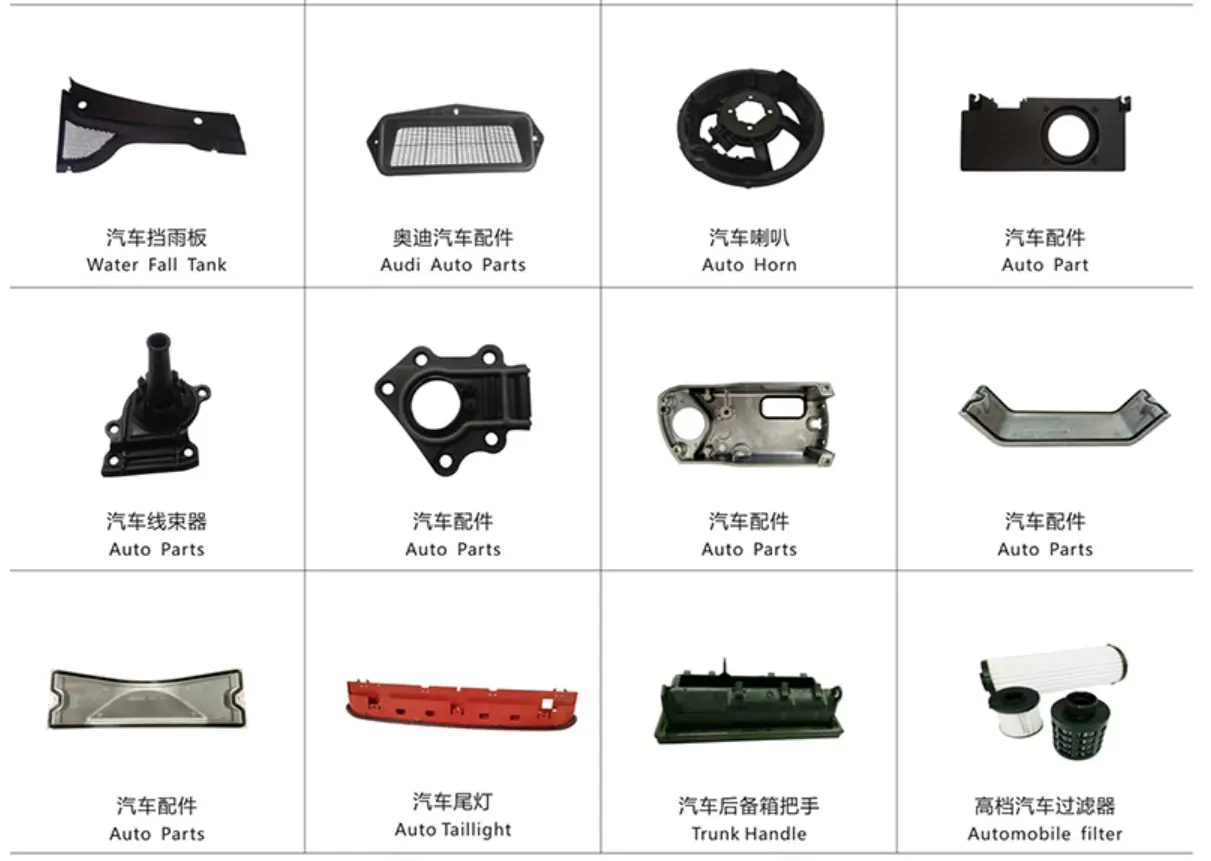
- New energy battery packs — structural bonding and gap filling for EV battery enclosures
- Electrical cabinets — foam sealing along door frames and panel edges
- Automotive parts — windshield bonding, powertrain sealing, and structural adhesive on 3D profiles
- Consumer electronics and chargers — thermal interface material dispensing and component bonding
- Lighting and household appliances — sealing irregular housing shapes with consistent bead profiles
- Construction doors and windows — sealant application on frame edges and corner joints
- Filters — potting and gap filling on assembled filter units
Quality Control and System Reliability
Integrated sensors measure back-pressure in real-time throughout the dispensing route. If a nozzle blockage or pressure spike is detected, the system stops and raises a warning before damaged components may reach the next step.
Closed loop flow meters regulate dispensing pressure to compensate for viscosity fluctuations in the glue during a shift. Temperature-controlled hoses provide a constant flow of material, eliminating the glue leakage, missing bead portions and high reject rates that may occur with manual or semi-automatic dispensing.
The system allows dynamic mixers and automated purge cycles for two component adhesives. They help prevent material curing within the nozzle during idle times, decreasing nozzle cleaning downtime.
The system of Gluing Robot is designed against ISO 9283 for robotic repeatability and ISO 12100 for safety risk reduction.
Gluing Robot vs. CNC Glue Dispensing Machine
| Feature | Gluing Robot | CNC Dispensing Machine |
|---|---|---|
| Working Range | Large; adapts to varied part sizes | Fixed work envelope |
| Movement | Multi-axis, full 3D path capability | Typically 3-axis, optimized for flat surfaces |
| Product Adaptability | High — handles complex and irregular shapes | Better suited to standard, flat geometry |
| Model Switching | Path reprogramming; no fixture changes required | May require physical fixture reconfiguration |
| Surface Treatment Option | Inline plasma integration available | Generally not available |
If you have items with curved surfaces, different forms, or regular modifications to your models, a robotic dispensing system provides more practical versatility than a normal CNC machine.
Why Choose Luoyang Ruichuang?
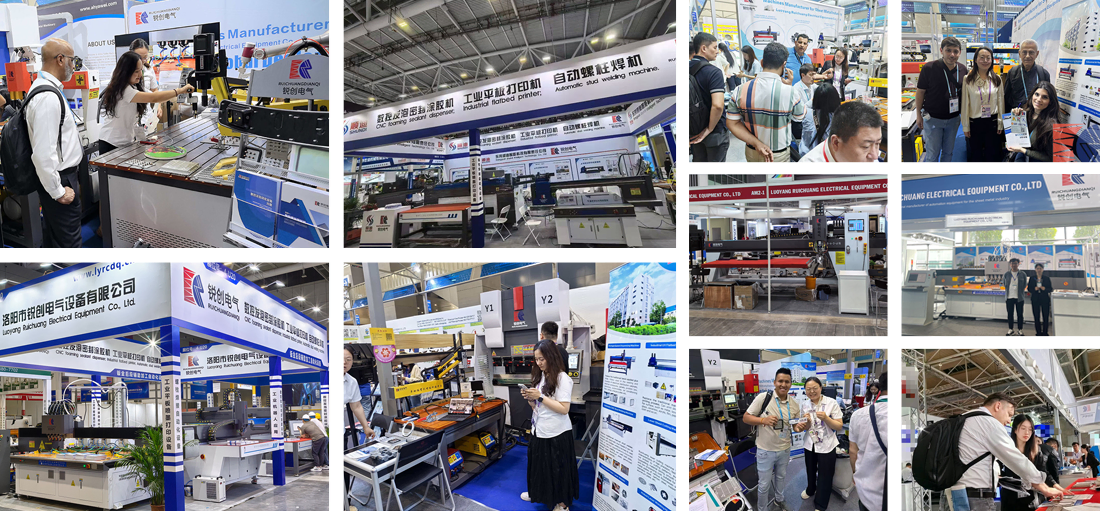
Founded in 2002, Luoyang Ruichuang has internal integration of mechanical, electrical and software development. The firm designs, produces, installs, commissions and maintains robot applications, spanning the whole lifespan of the equipment under a single supplier relationship.
Our in-house Automation instruction Center gives client teams hands-on instruction in PLC programming and robot operation. Dedicated service staff for after sales technical assistance with direct product knowledge
FAQ
Q:What adhesive materials can the product handle?
A:The system applies sealant, adhesive, foam glue, and thermal conductive glue across a range of viscosities — from water-thin liquids to heavy pastes — for sealing, bonding, potting, and gap filling.
Q:How does the system maintain consistent bead size?
A:Robot speed, glue pressure, and valve opening are controlled together along the entire programmed path. The closed-loop dispensing circuit adjusts automatically if conditions change during production.
Q:Which industries use the products most often?
A:Common sectors include new energy battery manufacturing, electrical cabinet assembly, automotive parts production, consumer electronics, lighting, filters, and construction doors and windows.
Q:Can the robot apply adhesive on parts with complex shapes?
A:Yes. The six-axis arm moves freely across curved surfaces, recessed geometry, corners, and irregular profiles that fixed dispensing machines cannot reach.
Q:What is the practical difference between the product and a CNC dispensing machine?
A:A CNC machine works well for flat, standard parts within a fixed work area. A robotic system handles larger working ranges, multi-angle operation, and complex or frequently changing part geometry with less mechanical reconfiguration.
Q:What does maintaining a two-component adhesive system involve?
A:Two-component systems use dynamic mixers and automated purging cycles to prevent the adhesive from curing inside the nozzle when the machine is idle. Regular purge intervals are programmed as part of the operating cycle.
Contact Us
Have questions about adhesive automation for your production line with Gluing Robot? Contact us at sales@lyrcautomation.com and our team will follow up with relevant technical details.