What Factors Should You Consider When Buying a PU Foam Gasket Dispensing Machine?
When buying a PU Foam Gasket Dispensing Machine, you need to weigh dispensing precision, production throughput, foam material compatibility, automation level, and long-term supplier support. The right FIPFG sealing system should match your workpiece geometry, IP protection requirement, and line cycle time—while coming with verified certifications such as CE and ISO 9001. Getting these factors right upfront protects your investment and keeps your production line running without costly interruptions.
Understanding PU Foam Gasket Dispensing Machines
What the Technology Actually Does
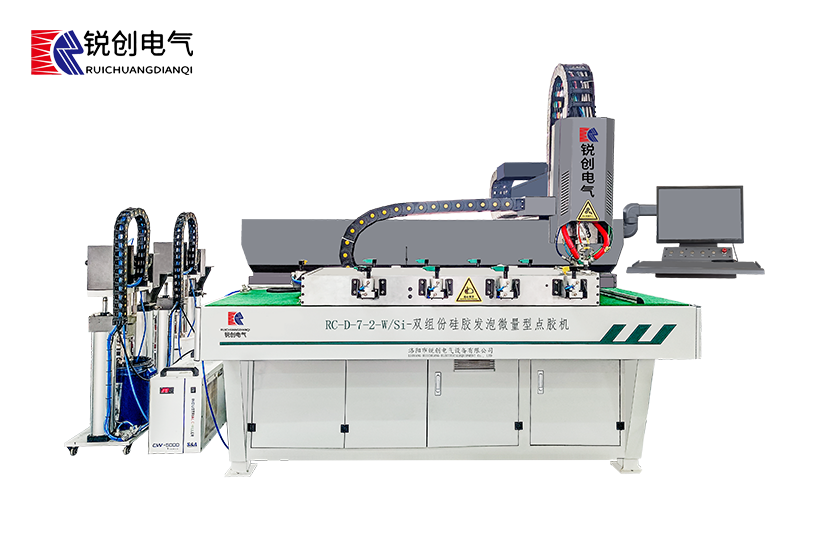
A PU Foam Gasket Dispensing Machine used for formed-in-place foam gasket (FIPFG) production mixes two polyurethane parts—polyol and isocyanate—at a precise stoichiometric ratio and then pours the liquid right onto the surface of a part. It foams up and hardens in place, making a continuous wall with no gaps. This is used instead of die-cut rubber strips and manual gasket fitting, which can go out of place and not compress properly every time.
Core Machine Types
Fully automatic CNC dispensing systems can handle large amounts of complicated 3D profiles with an accuracy of ±0.02 mm. Semi-automatic models work well in shops with average parts loads where an operator loads and unloads the parts. For prototypes or jobs with very few units, manual filling stands can be used. A servo-driven CNC machine with vision alignment is the best way to make parts for electrical cabinets or cars.
Where These Machines Are Used
Electricity boxes, car door modules and taillights, EV battery pack housings, outdoor LED light fixtures, HVAC shells, and industrial filter housings are all made with FIPFG sealing technology. It depends on the job what kind of foam toughness, bead width, and cure plan is needed. This is why machine flexibility is just as important as raw accuracy.
Core Factors to Evaluate When Choosing a Foam Gasket Dispensing System
Dispensing Precision and Path Accuracy
When selecting a PU Foam Gasket Dispensing Machine, dispensing precision and path accuracy are critical factors to consider. Whether a finished container passes an IP66 or IP67 test is directly related to how accurate the path is. Look for servo-driven axs that have encoder input and a vision-alignment module that can be added as an extra. This will help with mounting variation. Instead of switching hardware, the flow rate and movement speed of the pump should be able to be changed to get bead sizes between 5 mm and 30 mm.
Throughput and Cycle Time
Match your shift goal to the machine's rated run time. For making electrical cabinets, a single-door panel should be able to finish a filling cycle in 30 seconds, which includes the time it takes to clamp. You can set the foaming time between 8 and 60 seconds, so you don't have to buy a second machine to get the best results for both fast production runs and thicker, denser gasket profiles.
Material Handling and Temperature Stability
Polyurethane changes when the temperature changes. A device that heats and cools the A/B material tanks on a regular basis keeps the viscosity and mix ratio stable even when the temperature outside changes. If you don't have it, the foam density and tack-free time will change between morning and afternoon shifts, which will make the reject rate go up. Make sure that the machine constantly checks the temperature of the tank and lets operators know when conditions aren't meeting standards.
Comparing Your Equipment Options
Fully Automated vs. Semi-Automatic Models
A fully automated CNC system cuts the number of direct workers by one to two per shift and stops people from going off track. A semi-automatic type costs less up front, but it needs a trained operator to place the workpieces correctly. Full automation usually pays for itself in 18 to 24 months for factories that make more than 200 enclosures per shift because it saves workers time and money.
Total Cost of Ownership
The price you paid is only one line item. Take into account the cost of replacing the mixing head seal every year, lubricating the linear guides, and software updates. Not just a machine price, but also an estimate of the cost of ownership over five years. Machines that can use standard extra parts that can be bought from many places are less likely to break down when their supplies run out than machines that need special parts.
Certifications and Compliance Documents
If you want to sell your goods in North America or Europe, you have to have CE marking and ISO 9001 approval. CE paperwork is looked over twice: once when it goes through customs and again when the customer checks it. Shipments and sales have been held up because CE files were not complete or were self-declared. Make sure the supplier gives you more than just a CE label on the nameplate. Ask for a full technical file, a Declaration of Conformity, and test reports.
Practical Considerations for Getting the Most Out of Your Machine
Integration with Existing Production Lines
Bottlenecks happen when a dispensing machine can't talk to equipment upstream and downstream. Make sure the system works with common industrial protocols like Profibus, EtherNet/IP, or Modbus so it can send and receive status messages with your robot arm, conveyor, or quality control station. It takes less time to switch between container types when you can import CAD files and program while you're not online.
Safety and Operator Training
People who are exposed to isocyanates need to wear safety gear and allow air to flow through the area. The electrical cabinet, glue supply system, and motion control of the machine should all be housed in a single frame that keeps the user from coming into touch with moving parts and chemical dispensing zones. How quickly your team hits full production speed depends on how well they train operators. The best training is when it happens both on-site and through online video sessions.
After-Sales Support and Spare Parts Access
This is where a lot of buyers don't think about the risk. Unplanned downtime is greatly reduced when the provider has quick online technical support, written troubleshooting guides, and extra parts on hand. Make sure you have written confirmation of response times before you sign a purchase order. On-site setup and warranty support should be built into the contract, not added on as extras.
These operational factors—integration, safety, and ongoing support—often make the difference between a machine that works well for a long time and one that doesn't after the first year.
How to Make the Final Purchase Decision
Define Your Non-Negotiable Specifications
Before you call any suppliers for a PU Foam Gasket Dispensing Machine, write down the workpiece envelope, the required gasket bead width range, the target cycle time, the foam material specification (hardness, density, and temperature resistance), and the certification needs. This one step gets rid of offers that aren't matched and makes it fair to compare vendors.
Request a Sample Run Before You Commit
Send the seller a real piece of work to do a test dispensing run on, or set up a live video example of a similar part. Check the path deviation at corners and curves, look at the cross-section of the foam to make sure the density is consistent, and measure the tack-free time at the temperature where you are. Instead of marketing claims, real test data is used.
Negotiate the Full Package
Before you send out a purchase order, you should agree on the price, the warranty terms, the spare parts inventory, the training scope, and the expert help for the first year. With a clear delivery schedule—usually 15 to 30 working days for standard machines and 30 to 60 working days for custom configurations—your team can plan for installation and training for operators without stopping production.
Conclusion
It takes more than just comparing description sheets to pick the right foam gasket dispensing tools. It depends on the accuracy of the path, the ability to control the material temperature, the cycle time, the completion of the certification, and the supplier's ability to provide support to see if your investment produces consistent IP-rated seals at the rate your line needs. Carefully look at each factor, try out a real sample, and make sure you understand the whole after-sales package before deciding to commit. A machine that is well-matched and backed by a knowledgeable supplier will cut down on labor costs and reject rates for years to come.
FAQ
How is the mixing head cleaned to prevent clogging?
Most current FIPFG systems have an automatic high-pressure water-flushing cycle that cleans the mixing chamber of any foam that is left over after each output stop. This method is better for the environment than liquid cleaning because it stops foam from building up, which would change the mix ratios over time if it happened.
Can bead width be adjusted without changing hardware?
Yes. To make beads with widths between 5 mm and 30 mm, you can change both the flow rate of the gear pump and the speed of the CNC travel. Most changes in width in that range don't need a valve swap.
How long does the foam gasket take to cure fully?
Depending on the type of cloth and the temperature outside, the tack-free time is usually between 3 and 10 minutes. Within 20 to 60 minutes, the gasket usually reaches its full functional cure, which means it is as hard and set as it can be under compression.
What maintenance keeps long-term precision intact?
The three most important tasks are to regularly calibrate dosing pumps, replace mixing head seals when they wear out, and grease CNC linear guides on a regular basis. These steps keep the repetition accuracy of ±0.02 mm that IP-rating tests need.
Does ambient humidity affect foam quality?
Isocyanate reacts more quickly when there is a lot of humidity, which shortens the pot life and can lead to surface flaws. This risk is handled by machines that have air-drying units on the material bins and nitrogen blanketing for the isocyanate drum. This keeps the density of the foam the same throughout the year.
Partner with Ruichuang for Your Next PU Foam Gasket Dispensing Machine
Since 2002, Ruichuang has been focusing on automating the production of sheet metal. This has given us 24 years of direct production experience. Our RC-D-6-2-B/G PU Foam Gasket Dispensing Machine has a working area of 2,450 × 1,250 × 330 mm and gasket widths from 5 to 30 mm. It is approved by CE and ISO 9001 and is used for electrical cases, car parts, EV battery packs, and industrial enclosures. We are a verified manufacturer of the PU Foam Gasket Dispensing Machine, and we offer ODM/OEM customization, remote commissioning, and long-term spare parts supply. You can get a free trial by emailing us at sales@lyrcautomation.com.
References
Machinery's Handbook, Industrial Press, 2020.
Polyurethanes Handbook, Hanser Publications, 2019.
IEC 60529 – Degrees of Protection Provided by Enclosures (IP Code), International Electrotechnical Commission, 2013.
IEC/EN 61439 – Low-Voltage Switchgear and Controlgear Assemblies, International Electrotechnical Commission, 2021.
Handbook of Adhesives and Sealants, McGraw-Hill, 2016.
Automation in Manufacturing: Principles and Applications, Society of Manufacturing Engineers, 2018.