How Does a CNC Automatic Stud Welder Improve Sheet Metal Fabrication?
A CNC automatic stud welder improves sheet metal fabrication by replacing slow, inconsistent manual welding with computer-controlled precision. These machines use servo-driven positioning and automated stud feeding to place M3–M12 studs on carbon steel, stainless steel, or aluminum surfaces with positioning accuracy of ±0.3mm or better. Supporting drawn arc (ARC), short-cycle (SC), and capacitor discharge (CD) welding methods, they achieve cycle times as low as 3–8 seconds per stud. The result is higher throughput, fewer weld defects, and audit-ready process documentation that meets IATF 16949 and ISO 9001 requirements.
Understanding CNC Automatic Stud Welders and Their Role in Sheet Metal Fabrication
What the Machine Actually Does
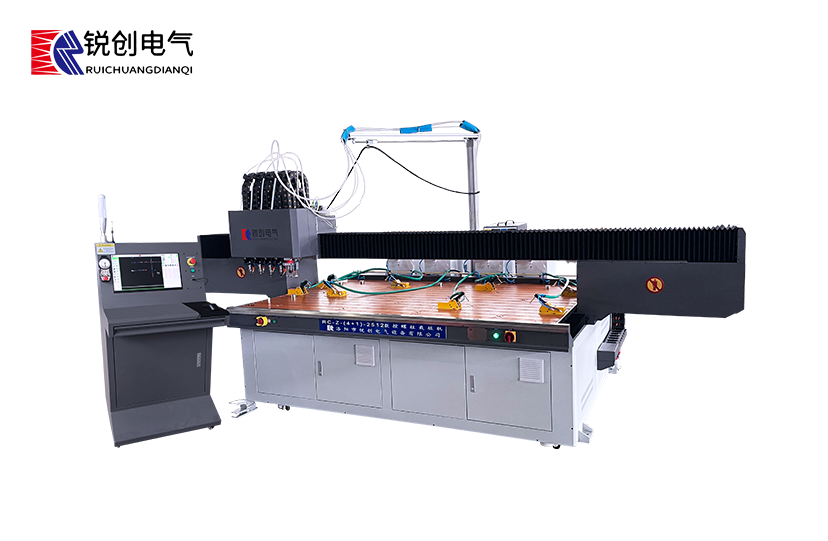
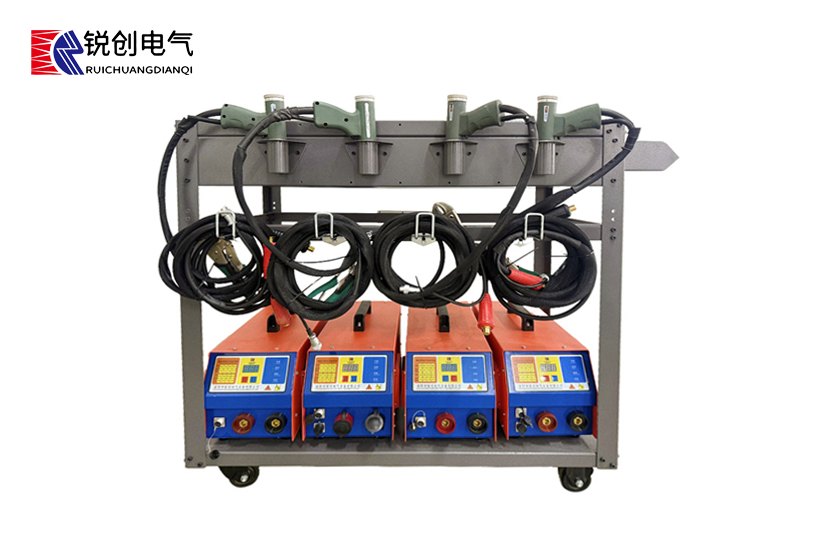
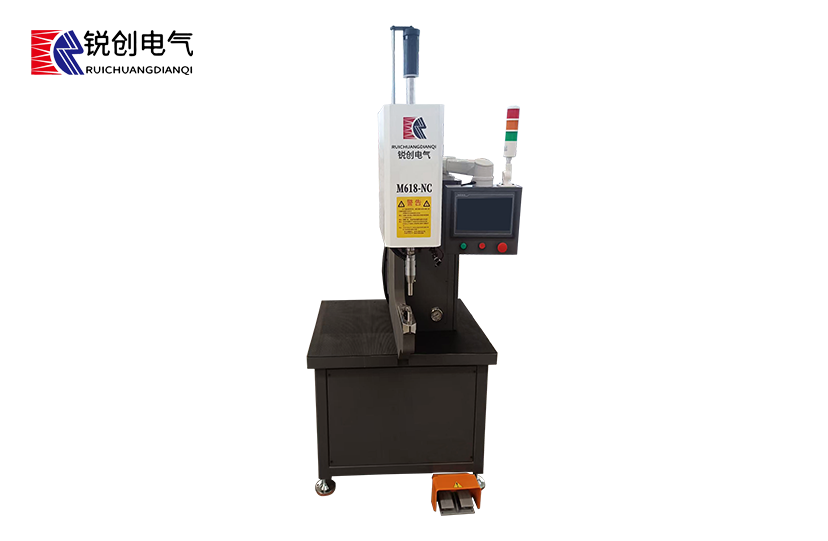
A motion processor, a servo-driven crane, and an automatic vibratory bowl feeder are all built into one production unit that is called a CNC stud welding system. The CNC program tells the feeder where to put a stud, the welding head goes to each point, and the weld goes off without anyone touching the piece of work. Electrical enclosure door panels, auto body panels, appliance housings, and server cabinet side plates are just a few of the common uses for this material.
Three Welding Processes, One Platform
One of the best reasons to use CNC automation is that you can switch between drawn arc, short-cycle, and battery discharge methods. A drawn arc is best for thicker structural parts, a short cycle is best for medium-gauge sheet metal that needs to be worked on quickly, and a capacitor discharge protects thin or decorative surfaces by focusing heat at the stud tip in micro-milliseconds while leaving the back side unmarked. Because all three processes are done on the same platform, a single machine can handle a wide range of products.
CAD/CAM Integration and Program Recall
Modern CNC bolt welders can directly read CAD coordinate files, which means engineers can quickly import a new fixture plan and make a welding path. It only takes less than 30 minutes of retraining time to switch between part numbers thanks to program recall. This directly addresses one of the main issues from production workers who are in charge of mixed-model lines.
How CNC Automatic Stud Welders Solve Traditional Fabrication Challenges
Three problems keep coming up with manual and semi-automatic stud welding: the quality of the weld depends on how skilled the user is; there are slowdowns in production when qualified welders are hard to find; and arc flash and weld spatter can be dangerous. Instead of depending on individual skill, CNC technology takes care of all of these at the process level.
Eliminating Weld Inconsistency
Every cycle, the plunge depth and touch pressure are managed by a servo that moves along the Z-axis. With closed-loop current tracking, the system makes sure that the weld parameters stay within a certain range, even if a user gets tired or their shift changes. This directly lowers cold welds, porosity, and pin pull-out fails that lead to assembly rejects further down the line.
Cutting Cycle Time and Labor Cost
On a good day, a trained person using a hand-held stud gun can make about 100 to 150 studs per hour. More than 400 to 600 studs can be added to the same fixture every hour by a CNC automatic system running a short-cycle process. That big increase in throughput cuts down on the time needed to work directly on each part, so the same number of people can oversee more production lines.
Smoke Extraction and Workplace Safety
Built-in dust collection and fume extraction modules keep the amount of dust and fumes in the air below the levels that are safe for workers according to OSHA (5 mg/m³ for general welding fumes). When a user feeds the studs automatically, their hands stay away from the arc zone. This lowers the risk of arc flash burns, which are still one of the most common injuries in manual stud welding.
Benefits of CNC Automatic Stud Welders for B2B Procurement Clients
When purchasing a CNC automatic stud welder, teams usually look at three types of return: how well it works for output, how well it makes sure quality, and how well it meets audit requirements. Here are the main benefits that this kind of tools brings to all three areas:
- Higher throughput per shift: Cycle times of 3–8 seconds per stud allow a single machine to match the output of three to four semi-automatic stations, freeing floor space and reducing energy draw per weld.
- Lower scrap and rework rates: Precision positioning at ±0.3mm and repeatable weld parameters cut first-pass reject rates, which in automotive and electrical cabinet production can represent 2–5% of total output under manual methods.
- Stud batch traceability: The CNC controller logs weld time, current, and position data for every stud fired. This log satisfies IATF 16949 clause 8.5.2 traceability requirements and gives quality engineers the data they need during a customer plant audit.
- Flexible material coverage: M3–M12 studs in carbon steel, stainless steel, and aluminum can run on the same machine with parameter set changes, supporting mixed-material product families without additional capital equipment.
Higher production per shift: cycle times of 3–8 seconds per stud let a single machine match the output of three to four semi-automatic stations. This frees up floor space and lowers the amount of energy needed for each weld.
How to Choose the Right CNC Automatic Stud Welder for Your Fabrication Needs
Match the Process to the Base Material
It is best to use capacitor discharge for metal sheets that are less than 1.5 mm thick or for surfaces that have a finish that can't show heat distortion. Frame parts bigger than 3 mm can use drawn circle. It's in the middle, between these two. Burn-through or poor fusion can happen if the wrong process is chosen, so the thickness of the material and the needs of the surface should guide the process choice before any other choice is made.
Evaluate Cycle Time Against Your Takt Time
If every 45 seconds, your production cell has to deliver a finished panel with 12 studs, so you need a machine that can do 12 welds in less than 30 seconds, plus time to load and remove the fixtures. Find the highest number of studs on each piece of work, and then make sure that the rated cycle time of the machine you're considering fits within your takt window by at least 15%.
Check After-Sales Infrastructure
If a CNC automatic stud welder breaks down during production, it costs the same whether the problem is a worn chuck or a bug in the software. Before making a commitment to a supplier, make sure they can respond quickly. A 4-hour on-site response for facilities in the Yangtze River Delta region and an 8-hour remote diagnosis for customers outside of China is a good standard. Also, make sure that the tools you need are available in your own country. For example, welding chucks, nozzles, and feed tubes usually need to be replaced every 10,000 to 30,000 rounds.
Maintenance, Safety, and Troubleshooting Tips for Optimal Performance
Daily and Weekly Maintenance Routines
At the end of each shift, clean the welding chucks and feed tubes to keep sparks from building up and changing the shape of the contact. Every week, check the pneumatic pressure controls. The Z-axis downward pressure affects the depth of the fusion directly, and a 10% drop in pressure can actually measureably lower the tensile strength. Back up your CNC codes once a month so that you don't lose them when you change the firmware on your controller.
Operator Safety Protocols
Even when systems are automatic, operators still need to wear the right PPE, like a rated welding face shield, leather gloves, and flame-resistant clothes. This is because workers are still exposed to residual arc risk when they change the chuck or set up the machine by hand. Before each shift starts, make sure that the machine's two-hand enable and physical guarding interlock work.
Diagnosing Weak Welds
It's almost always one of five things that cause automatic welds to be weak or cold: surface contamination (oil or mill scale), poor earth return grounding, misaligned stud feed, worn chuck contact faces, or air pressure that isn't within specs. Before changing the weld current, make sure you've done these five checks in order. If you change the current to fix a technical problem, you'll only hide the problem instead of fixing it.
Conclusion
Changing from semi-automatic or manual stud welding to a CNC automatic stud welder is more than just an upgrade in technology; it's also a choice about how to make things. When you combine servo positioning, the ability to do more than one process at once, and integrated traceability logging, you get a solution that meets the needs of OEM providers, electrical cabinet makers, and sheet metal fabricators: consistent weld quality, audit compliance, and predictable output. To pick the right machine, you must first make sure that the welding process fits your material and takt time needs. Next, you must choose a provider that has the after-sales support to keep the line going.
FAQ
What sheet metal materials are compatible with automated stud welding?
A common base is made of carbon steel, stainless steel, or an aluminum blend. Capacitor discharge can also be used to work on galvanized and powder-coated surfaces because it burns through thin coatings at the weld interface without hurting the finish around it.
How much more consistent is CNC stud welding compared to manual methods?
Studies that used controlled production found that automatic stud welding systems have first-pass weld acceptance rates above 99%, while skilled manual workers only get 92–95%. The main reason for this is getting rid of differences between operators in gun angle, contact pressure, and arc timing.
Does the system support quality documentation for customer audits?
Yes. For each stud, the controller keeps track of the weld current, cycle time, and XYZ position. This makes a per-part weld log that meets the standards for tracking set by IATF 16949 and ISO 9001:2015.
What are the typical consumable replacement intervals?
Chucks and nozzles for welding need to be cleaned every day and replaced every 10,000 to 30,000 cycles, based on the amount of current and the base material. Every week, check the delivery tip of stud feed tubes for wear.
Can one machine run multiple stud sizes?
Yes, one machine can handle stud sizes from M3 to M12 as long as the tools and parameters are changed. A trained operator can usually re-tool in less than 30 minutes.
Request a Custom CNC Stud Welding Solution from Ruichuang
Since 2002, Ruichuang has been focusing on sheet metal automation. He has 24 years of direct production experience making electrical cabinets, auto parts, and appliance housings. As a maker of only CNC automatic stud welders, we make machines that fit your part shape, stud specifications, and takt time. We then help you with installation, operator training, and long-term spare parts supply. To get a sample weld test or a technical advice, email our engineering team at sales@lyrcautomation.com .
References
American Welding Society. AWS D1.1/D1.1M: Structural Welding Code — Steel. 2020.
International Organization for Standardization. ISO 14555: Welding — Arc Stud Welding of Metallic Materials. 2017.
International Organization for Standardization. ISO 13918: Welding — Studs and Ceramic Ferrules for Arc Stud Welding. 2017.
Automotive Industry Action Group. IATF 16949:2016 — Quality Management System Requirements for Automotive Production. 2016.
Occupational Safety and Health Administration. OSHA Technical Manual, Section III, Chapter 5: Welding, Cutting, and Brazing. U.S. Department of Labor, 2019.
Schwartz, M. M. Handbook of Structural Ceramics and Welding Technology. McGraw-Hill, 2003.