What Factors Affecting CNC Dispensing Machine Accuracy ?
Dispensing accuracy is far more than just motion-axis positioning data. For CNC foam-gasket dispensing systems, it covers three interconnected metrics: volume output accuracy, positional accuracy, and process repeatability.
Position accuracy ensures the dispensing head follows your programmed path correctly. Volume accuracy controls how much two-component PU material gets dispensed onto workpieces. Repeatability guarantees identical gasket results batch after batch. Only when all three indicators perform well can your machine deliver stable, qualified foam gaskets for cabinets, EV battery packs and automotive parts.
Many buyers only focus on machine motion precision from datasheets. In real-world production, final gasket quality is also shaped by material conditions, workshop environment and daily equipment maintenance.
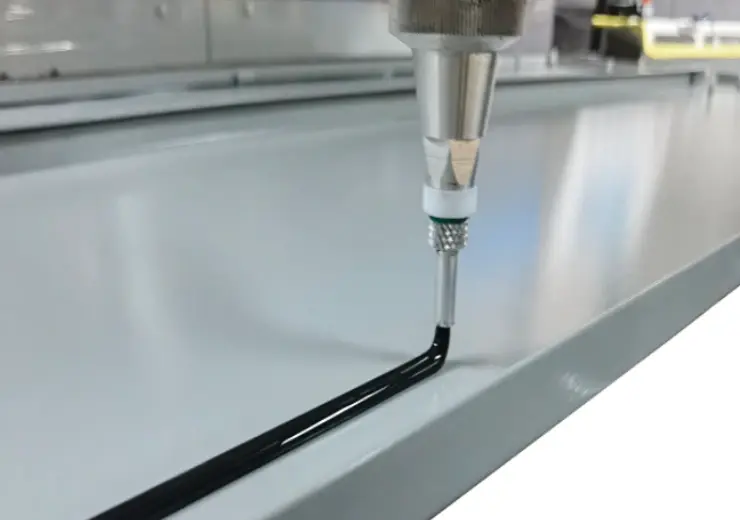
Why Dispensing Accuracy Matters For Industrial Sealing
Poor dispensing accuracy brings visible and hidden losses on your production floor. It directly influences sealing performance, product yield, raw-material consumption and long-term service life of finished enclosures.
- Sealing function failure Insufficient glue volume or offset dispensing paths produce narrow, thin foam gaskets. After assembly, gasket compression ratio may drop below 30%. Dust, moisture and water can penetrate the housing, causing products to fail IP-grade sealing requirements. Excessive dispensing creates over-thick gaskets. Compression ratio exceeds 60%, leading to gasket overflow, cabinet deformation and assembly screw tightening difficulties.
- Abnormal PU foaming performance Two-component PU foam relies on strict A-B mixing ratios. Minor ratio deviation triggers bad chemical reactions. You will face over-expansion, insufficient foaming, incomplete curing, or sticky soft gaskets that cannot provide reliable sealing.
- Higher manufacturing costs Two-component polyurethane sealing material carries high unit cost. Over-dispensing continuously wastes raw materials. Bad foaming results in full-part scrap and raises overall production expenditure.
- Short-term product reliability drop Unreasonable gasket compression accelerates elastic aging. Water and dust invade equipment housings. For outdoor cabinets and EV battery components, it may trigger corrosion and hidden safety risks.
Core Factors That Hurt Dispensing Consistency
1. Properties of PU two-component material
Material characteristics are the most easily-ignored source of dispensing deviation.
-
Viscosity shift: PU viscosity changes significantly with temperature swing. High viscosity leads to poor A/B mixing and unstable foaming. Low-viscosity material cannot maintain stable gasket bead shape. Constant-temperature material supply systems help lock viscosity within target ranges.
-
Temperature influence: Even 1℃ temperature variation changes gel time and curing speed. Reliable FIPFG equipment implements temperature control for both material tanks and mixing heads. Recommended workshop ambient temperature stays at 22-26°C ±1°C.
-
Curing speed: Fast-cure material risks mixing-head blockage. Slow-cure formula extends fixture holding time and lowers line throughput. Always match material pot-life with your production cycle.
-
Workshop humidity: Moisture reacts with PU component B, generating CO₂ gas. It creates internal bubbles and pinholes inside foam gaskets and weakens sealing capacity.
2. Dispensing pressure stability
Pressure fluctuation directly changes material flow rate and mixing proportion. Too high pressure outputs excessive glue and causes over-sized gaskets. Too low pressure brings insufficient bead volume and poor sealing protection. Even tiny ±0.01 MPa pressure drift will damage long-run consistency.
3. Mechanical & motion-system conditions
Worn metering pumps, aging seals, loose transmission structures and uncleaned mixing chambers gradually introduce deviation during continuous mass production.
Practical Ways To Boost Your Dispensing Accuracy
1. Select and match proper sealing material
-
Confirm material viscosity-temperature characteristics. Adjust machine temperature settings to match material supplier specifications.
-
Evaluate pot-life: short pot-life limits complex multi-corner dispensing paths; overly long pot-life slows cycle efficiency.
-
Pay attention to foam expansion ratio (2:1, 3:1, 4:1 etc.). Adjust machine output parameters according to final required gasket width and height.
2. Stabilize whole-loop pressure control
Stable pressure guarantees consistent A-B component flow. Practical measures include:
-
Install dual-stage precision pressure regulators and high-quality air-processing units.
-
Deploy pressure sensors near metering pumps for real-time monitoring.
-
Adopt closed-loop flow control, allowing PLC to auto-adjust pump speed and pressure values.
3. Stick to standardized routine maintenance
-
Timely mixing-head cleaning: PU material cures rapidly inside mixing chambers. Clean mixing head immediately after production shift with solvent or water as instructed. Residual cured material blocks channels and disturbs mixing ratio in next-batch runs.
-
Regular metering-pump calibration: Gear pumps and piston pumps wear gradually under long-time operation. Calibrate pumps at least every 30-day cycle to keep volume output stable.
-
Inspect seals, pipelines and nozzles regularly to avoid leakage and blockage.
4. Optimize fixture and workshop environment
Use repeatable fixtures to fix workpieces. Keep workshop temperature and humidity within recommended ranges. Run sample pre-tests before mass-production batches.
Common Defects, Root Causes & Quick Fixes
| Problem | Typical Root Cause | Recommended Solution |
| Gasket bead width unstable | Pressure fluctuation; viscosity drift; pump wear | Calibrate pump; stabilize material temperature; check air pressure system |
| artial foaming & pinholes | High workshop humidity; bad A-B mixing | Lower workshop humidity; inspect mixing-head status |
| Lower workshop humidity; inspect mixing-head status | Speed-parameter mismatch at corners | Tune corner deceleration parameters; check valve closing response |
| Overflow glue on gasket joints | Overflow glue on gasket joints | Adjust mixing valve closing signal timing; clean residual material |
| Poor gasket adhesion | Workpiece surface contamination / incomplete curing | Clean workpiece surface; verify material mixing ratio |
How To Select A High-accuracy CNC Dispensing Machine
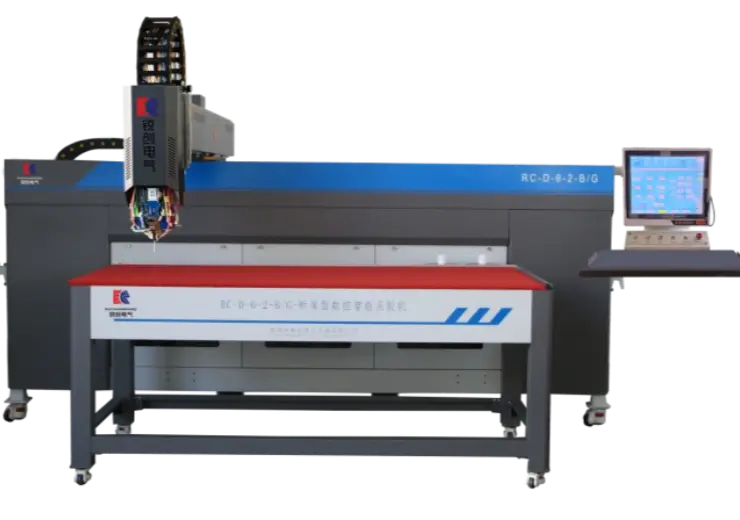
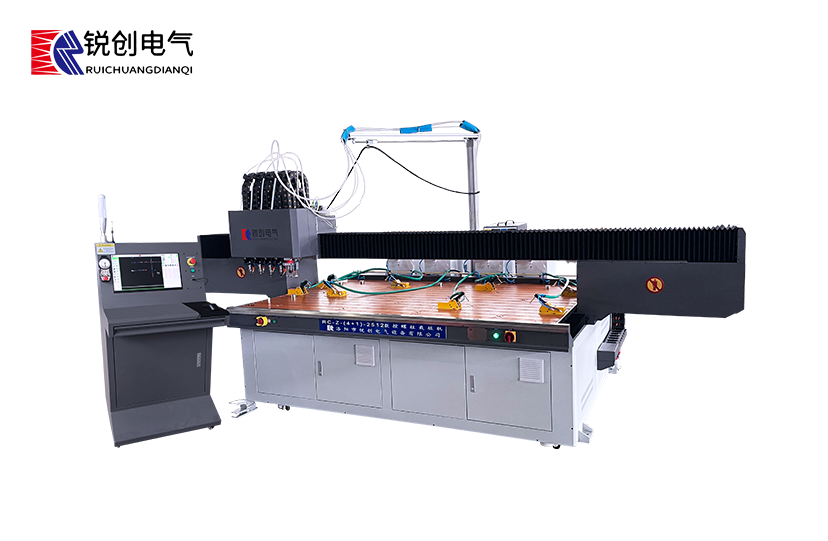
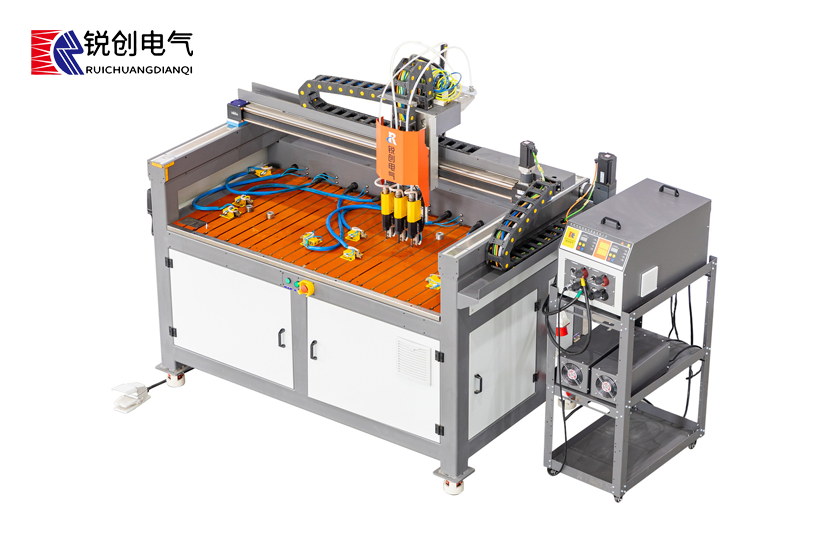
High-repeatability foam sealing starts with well-designed machine hardware and control logic. Our self-developed FIPFG dispensing machine integrates these core advantages for real-world workshop demands:
1.High-precision metering system: New-generation circulating mixing valve keeps metering accuracy within ±2%. It maintains stable A-B ratio even under non-stop continuous-production conditions.
2.Broad material compatibility: Supports gasket width 4-30 mm, compatible with most domestic and imported two-component PU foam materials.
3.Real-time pressure feedback: Imported pressure sensors monitor material supply status. The control system dynamically adjusts pressure to stabilize dispensing flow.
4.Optimized corner-dispensing performance: Combined mechanical-pneumatic closing structure for mixing chamber. Instant valve-shut-off delivers smooth corner joints without gaps or excess glue accumulation.
5.Intelligent dual-pressure cleaning system: Four-port turbo-flushing design fully removes residual PU material. It lowers water consumption and reduces your daily maintenance workload.
These features together deliver consistent gasket quality for electrical cabinets, EV battery packs and sheet-metal component sealing projects.
Final Conclusion
Dispensing accuracy is a combined result of four key dimensions: raw-material performance, machine hardware, workshop environment, and regular maintenance work. Weakness in any single link will reduce final sealing quality.
You cannot achieve stable gasket performance only by tweaking individual parameters on the control panel. The reliable solution lies in choosing suitable PU material, deploying high-quality CNC dispensing equipment, controlling workshop climate, and executing standardized maintenance workflows. When all factors work together, you will gain repeatable, high-quality foam-gasket output for your industrial-sealing production.